
Cumbia
Chicha Libre
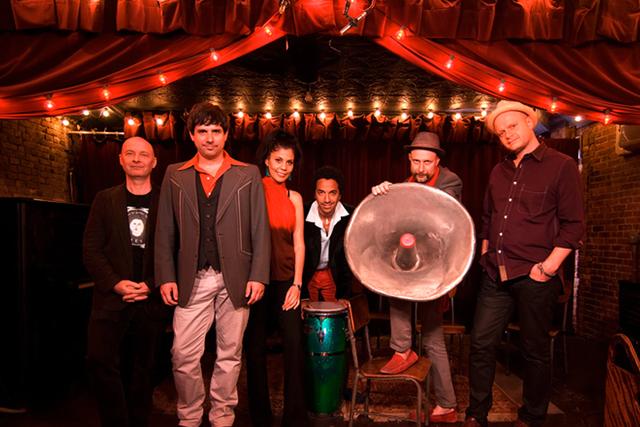
Chicha Libre is a Brooklyn-based six-member band founded by Olivier Conan. Its name is a reference to chicha, a corn-based liquor that has been produced in South America since the time of the Incas. It is also the name of a Peruvian musical genre (also known as Peruvian cumbia) on which the band's music is based. History Conan was first introduced to chicha music on a trip to Peru in 2005. Their first album, ¡Sonido Amazonico!, was released in 2008 on Barbes Records, a label which Conan runs from his home in Brooklyn. They released their second album, Canibalismo, in 2012, and an EP, Cuatro Tigres, in 2013, both digitally and on vinyl. The band's original members were Olivier Conan (lead vocalist, cuatro), Josh Camp (DuoVox, keyboards, background vocals), Vincent Douglas (guitar), Greg Burrows (percussion, background vocals, timbales, bongos, guiro, reco-reco), Timothy Quigley (percussion, bongo, shakers, conga) and Nick Cudahy (bass guitar). Additional members are Neil Ochoa (congas) and Karina Colis (timbales). Featured guest artists have included Jose Carballo (a former member of the seminal Peruvian chicha band, Los Hijos del Sol).
Daniel Villarreal
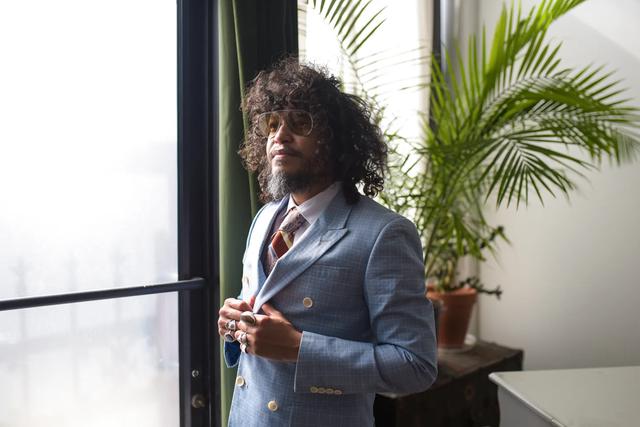
Daniel Villarreal-Carrillo is a well known drummer, musician and DJ in the Chicago music scene. Originally from Panamá he fuses his pan-Latin style with influences of psychedelic rock, Cumbia, afro-beat, boogaloo, rock, free experimental jazz, hip-hop, and funk to create an original contemporary soundscape. Daniel Villarreal has long been a widely known and beloved character on the Chicago music scene. On almost any night of the week, you’ll find him DJing at at least one spot on bustling 18th Street in his home neighborhood of Pilsen. If he’s not there, he’s playing drums with Dos Santos, Valebol, The Los Sundowns or Ida y Vuelta (all bands he co-leads), or sitting in with Wild Belle or Rudy De Anda. Villarreal may be most known for his big style and magnetic personality, but to musicians on the scene, it’s as much for his talents as a malleable and reliable drummer, with a deep pocket in many styles and sounds... As a DJ, Daniel specializes in groovy vintage Afro-diasporic sounds. His DJ sets (vinyl or digital) showcase his knowledge of world music, electronica,Tropicalia, vintage latin soul, Chicha, psychedelic Cumbia, Afrobeat, reggae, funk, and groovy deep cuts beats.
Son Rompe Pera
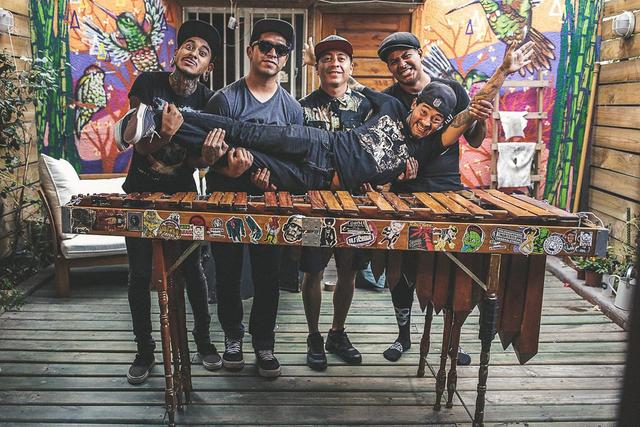
Born and raised in the deep outskirts of Mexico City, the Gama brothers are keeping alive the rich legacy of marimba music running through their family with their latest project, Son Rompe Pera. While firmly rooted in the tradition of this historic instrument, their fresh take on the folk icon challenges its limits as never before, moving it into the garage/punk world of urban misfits and firmly planting it in the 21st century. Originally performing alongside their father at local events as kids, they now find themselves at the forefront of the contemporary international cumbia scene with their sonic explorations of the classic marimba. Their absolutely unique blend comes from a typical youthful rebellion, when as teenagers they left behind their upbringing and began to play in various punk, rockabilly and ska bands. Now they’ve gone full circle with the return of the marimba on lead, and mixing all of their influences together with an energetic take on the popular instrument, giving it a new twist never before seen in Mexican folk music. Their live shows are a sweaty mess of dancing fans, and this garage-cumbia-marimba-punk band (the only band of its kind in the world) never disappoints on stage. Their authenticity shines through as they give their modern interpretation of Mexican, Peruvian, and Colombian classics, as well as their own original material and some surprise covers. The contrast of the traditional marimba with their youthful attitude and street sense connects the audience to the past while dancing into the future. Formed in 2017, Son Rompe Pera broke onto the potent cumbia scene of today as the marimba duo of brothers Jesús Ángel and Allan Gama (Kacho and Mongo), who inherited this tradition from their father, Batuco. A marimba player by trade, he taught them to play and understand the marimba, which they first used to revive old folk songs for their friends, family, and passers-by on the street. They then incorporated it into the performance of popular Mexican cumbia songs, while spicing things up with an animated identity of their own, creating rhythms of an imaginary repertoire that grows, spreads, and connects the Americas with every passing year. Son Rompe Pera is currently made up of five musicians, (conga, percussion, güiro, drums, guitar, bass and marimba) who develop a full live sound with strong Pan-Latino representation. After a chance meeting in the La Lagunilla market in Mexico City, they were invited to Chile in 2017, where they played over forty gigs at some of the biggest festivals in the country, while also spending weekends at the famous Persa Bio-Bio street market, keeping alive their legacy as street musicians wherever they went. The band also grabbed the attention of major musicians working in this style, such as Café Tacuba, Celso Piña, Fidel Nadal and the Chileans Sonora de Llegar, Santaferia, Anarkia Tropical and the singer Aldo Asenjo, AKA Macha, who has incorporated the Mexican musicians into his three bands Chico Trujillo, La Floripondio, and Bloque Depresivo. In Chile they also took advantage of staying at the mythical Perros con Tiña studio, where they continued to develop their sound and were able to record their first record, loaded with famous guests from the current Chilean music scene. The album, Batuco, due out on the ZZK label imprint, AYA Records, on February 28th, 2020, is named after their recently deceased father, and is a representation of everything he taught them growing up, plus their first steps into a new, international career. In their own words: “The basics of Son Rompe Pera have been developing since we were kids, and the music and streets are in our blood. We found the markets flooded with old, forgotten folk music, and so as kids we decided to carry the marimba with us and create this musical project from our own roots, mixing in rhythms which we thought would never be musical brothers, like cumbia, punk, and the sounds of our barrios and our everyday lives.” The marimba is an idiophone percussion instrument, similar in form to a xylophone. Xylophones are widely used in central and western African music, and were taken to Latin America during the conquest and colonization. The term marimba comes from the Bantu marimba or malimba. The word is formed from ma, or “many”, and rimba “single-bar xylophone.” It consists of a series of wooden strips of different sizes, arranged from largest to smallest, which are struck with mallets to produce musical notes. Each key has its own resonator and the instrument as a whole is fixed into a frame with legs.
Sonido Gallo Negro
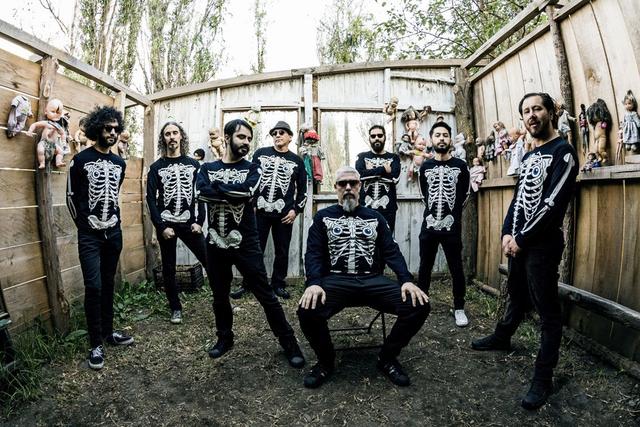
Sonido Gallo Negro (Black Rooster Sound) is a stunning 9-piece, instrumental combo from east Mexico City that channels both the mystique and mysticism of 1960’s Peruvian cumbia. The band integrates styles like Amazonian cumbia, huayno, cumbia sonidera, boogaloo and chicha (Peruvian cumbia) with electric guitars, Farfisa organ, theremin, flute and of course fluid Latin percussion. Spaghetti western soundtracks, psychedelia and surf music also echo in their compositions. Sonido Gallo Negro’s music proposal enrichens and cultivates this musical genre with its exotic sui generis version that integrates outstanding visuals performed live by designer Dr. Alderete, who illustrates in real time.