
Latin

Atahualpa Yupanqui
Atahualpa Yupanqui (Spanish pronunciation: [ataˈwalpa ʃuˈpaŋki]; born Héctor Roberto Chavero Aramburu; 31 January 1908 – 23 May 1992) was an Argentine singer, songwriter, guitarist, and writer. He is considered the most important Argentine folk musician of the 20th century. Biography Yupanqui was born Héctor Roberto Chavero Aramburu in Pergamino (Buenos Aires Province), in the Argentine pampas, about 200 kilometers away from Buenos Aires. His father was a mestizo descended from indigenous people, while his mother was born in the Basque country. His family moved to the Northwest city of Tucumán when he was nine. In a bow to two legendary Incan kings, he adopted the stage name Atahualpa Yupanqui, which became famous all around the world. In his early years, Yupanqui traveled extensively through the northwest of Argentina and the Altiplano studying the indigenous culture. He became politically active and joined the Communist Party of Argentina. In 1931, he took part in the failed Kennedy brothers uprising against the de facto government of José Félix Uriburu and in support of deposed president Hipólito Yrigoyen. After the uprising was defeated, he was forced to seek refuge in Uruguay. He returned to Argentina in 1934. In 1935, Yupanqui paid his first visit to Buenos Aires; his compositions were growing in popularity, and he was invited to perform on the radio. Shortly thereafter, he made the acquaintance of pianist Antonieta Paula Pepin Fitzpatrick, nicknamed "Nenette", who became his lifelong companion and musical collaborator under the pseudonym "Pablo Del Cerro". Because of his Communist Party affiliation (which lasted until 1952), his work suffered from censorship during Juan Perón's presidency; he was detained and incarcerated several times. He left for Europe in 1949. Édith Piaf invited him to perform in Paris on 7 July 1950. He immediately signed a contract with "Chant Du Monde", the recording company that published his first LP in Europe, "Minero Soy" (I am a Miner). This record won first prize for Best Foreign Disc at the Charles Cros Academy, which included three hundred fifty participants from all continents in its International Folklore Contest He subsequently toured extensively throughout Europe. In 1952, Yupanqui returned to Buenos Aires. He broke with the Communist Party, which made it easier for him to book radio performances. While with Nenette they constructed their house on Cerro Colorado (Córdoba). Recognition of Yupanqui's ethnographic work became widespread during the 1960s, and nueva canción artists such as Facundo Cabral, Mercedes Sosa and Jorge Cafrune recorded his compositions and made him popular among the younger musicians, who referred to him as Don Ata. Yupanqui alternated between houses in Buenos Aires and Cerro Colorado, Córdoba province. During 1963–1964, he toured Colombia, Japan, Morocco, Egypt, Israel, and Italy. In 1967, he toured Spain, and settled in Paris. He returned regularly to Argentina and appeared in Argentinísima II in 1973, but these visits became less frequent when the military dictatorship of Jorge Videla came to power in 1976. In February 1968, Yupanqui was named a Knight of the Ordre des Arts et des Lettres of France by the Ministry of Culture of that country, in honor of 18 years work enriching the literature of the French nation. Some of his songs are included in the programs of Institutes and Schools where Castilian Literature is taught. In 1985, the Konex Foundation from Argentina granted him the Diamond Konex Award, one of the most prestigious awards in Argentina, as the most important Popular Musician in the last decade in his country. In 1989, an important cultural center of France, the University of Nanterre, asked Yupanqui to write the lyrics of a cantata to commemorate the Bicentennial of the French Revolution. The piece, entitled "The Sacred Word" (Parole sacrée), was released before high French authorities. It was not a recollection of historical facts but rather a tribute to all the oppressed peoples that freed themselves. Yupanqui died in Nîmes, France in 1992 at the age of 84; his remains were cremated and dispersed on his beloved Colorado Hill on 8 June 1992.

Cal Tjader
Callen Radcliffe "Cal" Tjader, Jr. (/ˈtʃeɪdər/ CHAY-dər; July 16, 1925 – May 5, 1982) was an American Latin jazz musician, known as the most successful non-Latino Latin musician. He explored other jazz idioms, even as he continued to perform the music of Cuba, the Caribbean, and Latin America for the rest of his life. Source Wikipedia
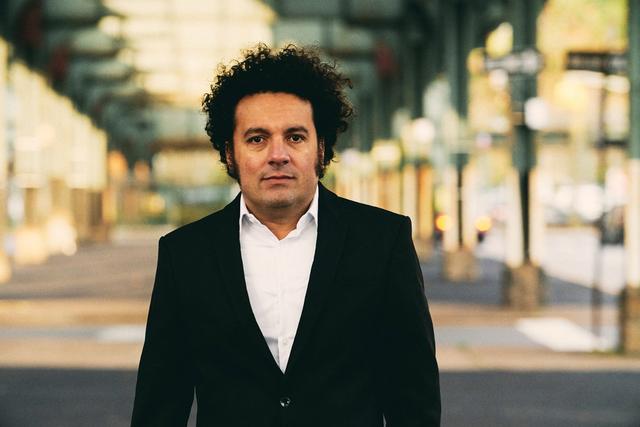
Cheo
Latin GRAMMY winner and former founding member, lead songwriter and guitar player of Los Amigos Invisibles, Jose Luis “Cheo” Pardo, is based in Brooklyn, NY and hails from Caracas, Venezuela. Cheo has compiled a soulful body of tasteful work over the years, including projects released under the names of Locoeach, DJ Afro, Los Crema Paraiso, and Orquesta Discotheque. He has also released over 50 remixes for a wide variety of artists like The Beastie Boys, David Byrne, Devendra Banhart, Julieta Venegas, Natalia Lafourcade, Monsieur Periné and Basement Jaxx. His new album SORPRESA (released on April 2020) includes sounds of Latin Soul, Bossa nova, Disco, Funk, House, and Mambo- this time, all released under his own name.
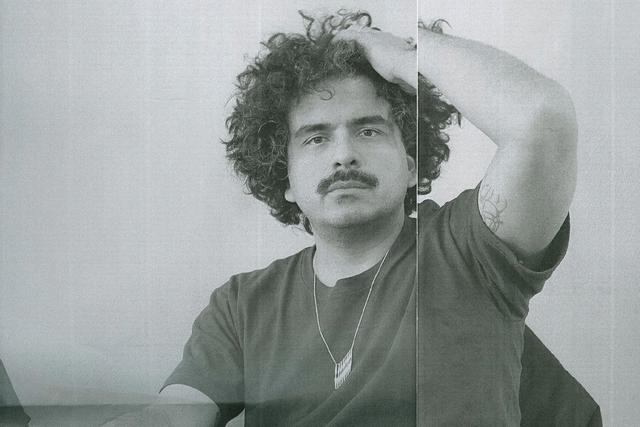
Helado Negro
Roberto Carlos Lange (born 1980), better known by his stage name Helado Negro, is an American musician. In 2019 he was awarded a United States Artists Fellow in Music and also the recipient of a 2019 Grants to Artists award in Music from the Foundation for Contemporary Arts. In 2015 he received a Joyce Foundation award. A South Florida native, born to Ecuadorian immigrants and based in Brooklyn, Roberto Carlos Lange's upbringing provides essential elements to his songwriting, including his consistently bilingual—English and Spanish—lyrics. Exploring the expressivity within intense states of being, Latinx identity, and pluralistic sensibilities, his music as Helado Negro is an engrossing statement achieved through lyrically personal and political avant-pop music. Since Helado Negro's 2009 debut album Awe Owe, Lange has cultivated an untraditional approach to songcraft that places his voice on an adventurous musical impulse without shying away from familiar pop appreciation, through multiple projects under various aliases. Helado Negro released his 2019 album This Is How You Smile through RVNG Intl., a Brooklyn-based music institution. This Is How You Smile received an 8.5 rating and Best New Music from Pitchfork. Early life The son of Ecuadorean immigrants, Helado Negro (Roberto Carlos Lange) was born in South Florida in 1980. He grew up in Lauderhill and Davie. As a high school student during the early 1990s, Roberto Carlos Lange would stay up late watching "Liquid Television" on MTV. Intrigued by the experimental videos and animation he saw there, he "was fascinated by the mystery of how they were made, and was curious as to how to make them." In 1999 he enrolled at the Savannah College of Art and Design (SCAD) in Savannah, Georgia, to study Computer Art and Sound Design. His sound studies focused on installation, performance and experimental art. During his time at SCAD, he participated in experimental sound and art shows, and he began to develop his musical work by purchasing an MPC sampler to create music. He graduated in 2003 with a B.F.A. in Computer Art from SCAD.
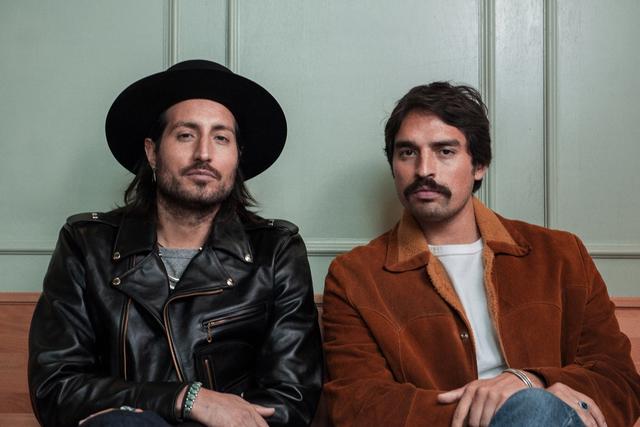
Hermanos Gutiérrez
“When Alejandro and I play together, it’s like we are driving a car,” says Estevan Gutiérrez, one half of the guitar duo Hermanos Gutiérrez. “It’s like we are taking a road trip. Sometimes we’re driving through a desert. Sometimes we’re traveling up the coast. But always we are in nature, and we see the most beautiful landscapes, sunrises, sunsets.” The music these two brothers make evokes expansive plains and rough wildernesses, saguaros and surfs, spaghetti westerns and Morricone soundtracks, Lynch and Jarmusch. With their guitars they travel through landscapes haunted by vaqueros, cancioneros, wanderers, fugitives, lovers, family—and whatever ghosts their listeners bring to the music. “Each album is a journey on its own,” says Alejandro Gutiérrez. “We just have to go with the music, trust in ourselves, and see where it takes us.” El Bueno Y El Malo is their most epic journey yet: Working with the Black Keys’ Dan Auerbach at his Easy Eye Sound Studio in Nashville, they’ve crafted ten vivid compositions that highlight their intimate guitar playing, where one brother’s rhythms and the other brother’s melodies twine around each other so that they become inextricable. Together, they generate what Estevan calls a “deeper, darker energy” defined by complex arrangements, sophisticated playing, and most of all their very close relationship. “We have such different personalities and such different approaches,” says Alejandro,” but in the end we have a strong balance. Because we’re brothers and because we love each other, there’s always this connection.”
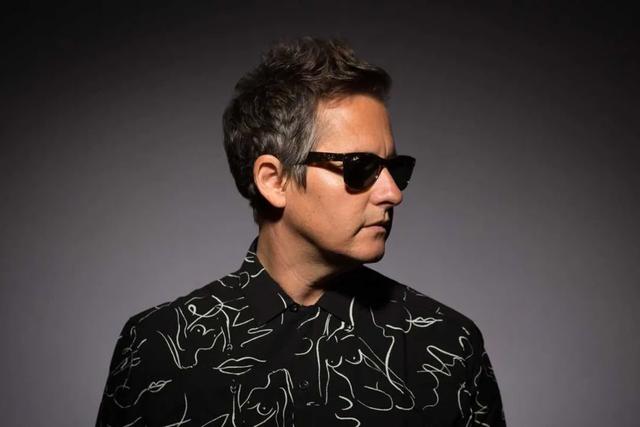
Josh Rouse
Josh Rouse (born March 9, 1972) is an American folk/roots pop singer-songwriter. Originally from Nebraska, Rouse began his recording career in Nashville in 1998 and later relocated to Spain. In 2014, Rouse won a Spanish Goya Film Award in the category of Best Original Song for "Do You Really Want To Be In Love?" from the motion picture La Gran Familia Española. Biography Born in the rural town of Oshkosh, Nebraska, he moved to various places during his childhood including Utah, California, Wyoming, and Georgia. He began writing songs aged 18, and following his nomadic childhood, he eventually moved to Clarksville, Tennessee to attend college (although he soon dropped out and moved to Nashville, Tennessee and worked as a parking valet), where he met some local musicians and began recording. The initial recordings he put to tape eventually became his debut release, Dressed Up Like Nebraska (1998). The album received critical acclaim from music writers. Billboard wrote that it was "a dark-horse gem", and "[a]s pure and unpretentious as any singer/songwriter album issued this year". He went on to collaborate with Kurt Wagner on an EP the following year, and toured in support of artists such as Mark Eitzel, Aimee Mann, and Vic Chesnutt. Home (2000) and Under Cold Blue Stars (2002) followed before he began a working relationship with producer Brad Jones on 1972, released in 2003. "Directions" from Home was used on the soundtrack to Cameron Crowe's film Vanilla Sky. After his first marriage ended, Rouse relocated to Spain to be with his then girlfriend (and now wife) Paz Suay and has resided there off and on since 2004. His last album recorded before the move, Nashville, was released in 2005 and reached number 66 on the UK Albums Chart. Rouse and Suay moved back to the US to promote his 2007 album Country Mouse City House, but they returned to Spain after Suay became pregnant. He collaborated with Suay as 'She's Spanish, I'm American', the duo releasing a self-titled EP in 2007. His music took on Spanish and Latin American influences and albums such as El Turista included songs sung in Spanish. Rouse and Suay have two children. On November 1, 2019, Rouse released the holiday album The Holiday Sounds Of Josh Rouse.
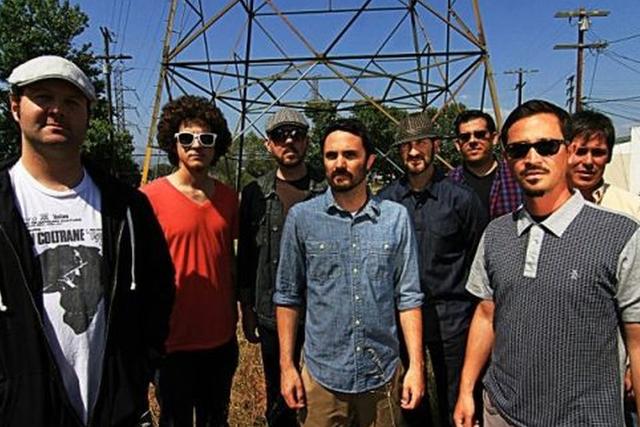
Jungle Fire
Jungle Fire’s highly infectious and explosive sound draws inspiration from the groundbreaking rhythm sections behind James Brown, Fela Kuti, Ray Barretto and Irakere; a musical recipe consisting of West African and Afro-Caribbean styles layered with heavy break-beat funk, all spiced with a dose of uniquely Angeleno grit. Originally conceived as a one-off project back in 2011, JF quickly gained attention and thus proved its place among the thriving LA funk/soul scene by lighting up local clubs, venues and underground warehouse parties. The buzz grew and word of mouth spread eventually linking up the band with the Ohio-based indie soul label Colemine Records to cut their first 7” single “Comencemos” (a cover of Fela’s “Let’s Start”). Lauded by DJ’s, radio stations, tastemakers and rabid funk fans across the globe “Comencemos” sold out internationally paving the way for the second 7” Colemine release “Firewalker”. “Few bands live up to their name in the way Jungle Fire do; fusing Cumbia, Afrobeat and traditional funk, each JF jam blazes the floor with real power” as described by Juno Records UK, best sums up the Jungle Fire live show. Serving up a healthy dose of originals and deep latin/afro funk covers all cooked up together in a live mixtape style set ensuring an energy that is nothing short of fire. Since their inception Jungle Fire has played an impressive amount of club dates and festivals both domestic and abroad having shared the stage with Shuggi Otis, The Blackbyrds, Lee Fields, Charles Wright, The Budos Band and even performing for Los Angeles’ recent mayoral inauguration. Currently, JF has been supporting their first full-length record “Tropicoso” via the Los Angeles heavyweight Latin Alternative label Nacional. Focused on taking their show international Jungle Fire embarked on a massively successful U.K. tour playing to packed venues at every stop including headlining Craig Charles’ Funk Club (Band On The Wall) and BBC 6 Radio. Not stopping there, the band also made their South American debut at the Mompox Jazz Festival in Colombia.
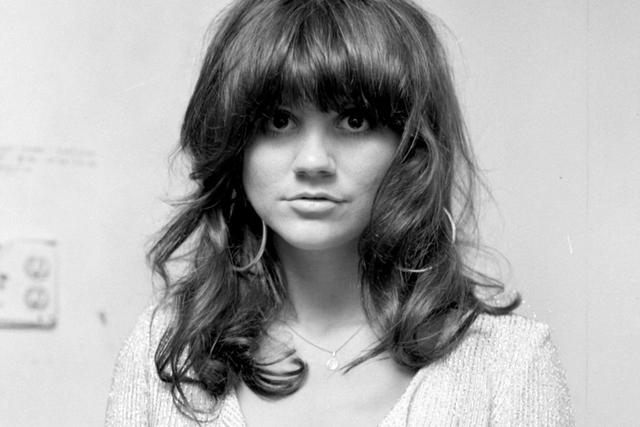
Linda Ronstadt
Linda Maria Ronstadt (born July 15, 1946) is a retired American popular music singer known for singing in a wide range of genres including rock, country, light opera, and Latin. She has earned 10 Grammy Awards, three American Music Awards, two Academy of Country Music awards, an Emmy Award, and an ALMA Award, and many of her albums have been certified gold, platinum or multiplatinum in the United States and internationally. She has also earned nominations for a Tony Award and a Golden Globe award. She was awarded the Latin Grammy Lifetime Achievement Award by The Latin Recording Academy in 2011 and also awarded the Grammy Lifetime Achievement Award by The Recording Academy in 2016. She was inducted into the Rock and Roll Hall of Fame in April 2014. On July 28, 2014, she was awarded the National Medal of Arts and Humanities. In 2019, she will receive a joint star with Dolly Parton and Emmylou Harris on the Hollywood Walk of Fame for their work as the group Trio. In total, she has released over 30 studio albums and 15 compilation or greatest hits albums. Ronstadt charted 38 Billboard Hot 100 singles, with 21 reaching the top 40, 10 in the top 10, three at number 2, and "You're No Good" at number 1. This success did not translate to the UK, with only her single "Blue Bayou" reaching the UK Top 40. Her duet with Aaron Neville, "Don't Know Much", peaked at number 2 in December 1989. In addition, she has charted 36 albums, 10 top-10 albums and three number 1 albums on the Billboard Pop Album Chart. Her autobiography, Simple Dreams: A Musical Memoir, was published in September 2013. It debuted in the Top 10 on The New York Times Best Seller list. Ronstadt has collaborated with artists in diverse genres, including Bette Midler, Billy Eckstine, Frank Zappa, Carla Bley (Escalator Over the Hill), Rosemary Clooney, Flaco Jiménez, Philip Glass, Warren Zevon, Emmylou Harris, Gram Parsons, Dolly Parton, Neil Young, Paul Simon, Earl Scruggs, Johnny Cash, and Nelson Riddle. She has lent her voice to over 120 albums and has sold more than 100 million records, making her one of the world's best-selling artists of all time. Christopher Loudon, of Jazz Times, wrote in 2004 that Ronstadt is "blessed with arguably the most sterling set of pipes of her generation." After completing her last live concert in late 2009, Ronstadt retired in 2011. She was diagnosed with Parkinson's disease in December 2012, which left her unable to sing.

Manu Chao
Manu Chao (Spanish pronunciation: [ˈmanu ˈtʃao]; born José-Manuel Thomas Arthur Chao, June 21, 1961) is a French musician of Spanish descent. He sings in French, Spanish, English, Italian, Arabic, Catalan, Galician, Portuguese, Greek and occasionally in other languages. Chao began his musical career in Paris, busking and playing with groups such as Hot Pants and Los Carayos, which combined a variety of languages and musical styles. With friends and his brother Antoine Chao, he founded the band Mano Negra in 1987, achieving considerable success, particularly in Europe. He became a solo artist after its breakup in 1995, and since then tours regularly with his live band, Radio Bemba.
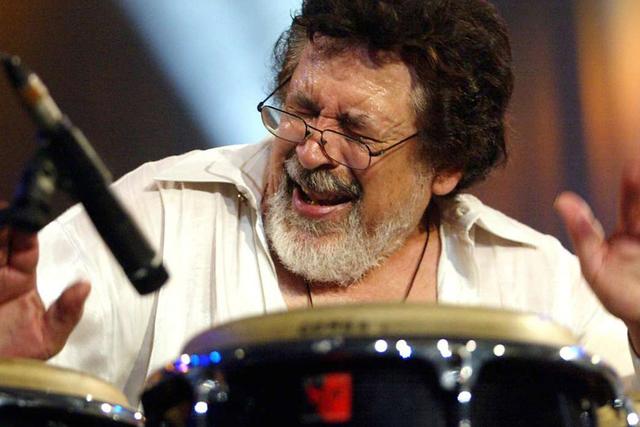
Ray Barretto
Ray Barretto (April 29, 1929 – February 17, 2006) was an American percussionist and bandleader of Puerto Rican ancestry. Throughout his career as a percussionist, he played a wide variety of Latin music styles, as well as Latin jazz. His first hit, "El Watusi", was recorded by his Charanga Moderna in 1962, becoming the most successful pachanga song in the United States. In the late 1960s, Barretto became one of the leading exponents of boogaloo and what would later be known as salsa. Nonetheless, many of Barretto's recordings would remain rooted in more traditional genres such as son cubano. A master of the descarga (improvised jam session), Barretto was a long-time member of the Fania All-Stars. His success continued into the 1970s with songs such as "Cocinando" and "Indestructible." His last album for Fania Records, Soy dichoso, was released in 1990. He then formed the New World Spirit jazz ensemble and continued to tour and record until his death in 2006. Life and career Early years Barretto (his real name, "Barreto", was misspelled on his birth certificate) was born on April 29, 1929, in New York City. His parents moved to New York from Puerto Rico in the early 1920s, looking for a better life. His father left their family when Barretto was four, and his mother Delores moved the family to the Bronx, and from a young age he was influenced by his mother's love of music and by the jazz of Duke Ellington and Count Basie. In 1946, when Barretto was 17 years old, he joined the Army. While stationed in Germany, he met Belgian vibraphonist Fats Sadi. However, it was when he heard Dizzy Gillespie's "Manteca" with Gil Fuller and Chano Pozo that he realized his calling. Beginnings as a sideman In 1949, when Barretto returned home from military service, he started to visit clubs and participated in jam sessions, where he perfected his conga playing. On one occasion Charlie Parker heard Barretto play and invited him to play in his band. Later, he was asked to play for José Curbelo and Tito Puente, for whom he played for four years. It was in 1958, while playing for Puente, that Barretto received his first recoding credit. Barretto developed a unique style of playing the conga and soon he was sought by other jazz band leaders. Latin percussionists started to appear in jazz groups with frequency as a consequence of Barretto's musical influence. Charanga Moderna and rise to fame In 1960, Barretto was a house musician for the Prestige, Blue Note, and Riverside labels. He also recorded on Columbia Records with Jazz flautist Herbie Mann. New York had become the center of Latin music in the United States and a musical genre called pachanga was the Latin music craze of the early 1960s. In 1962, Barretto formed his first group, Charanga La Moderna, and recorded his first hit, "El Watusi" for Tico Records. He was quite successful with the song and the genre, to the point of being typecast (something that he disliked). Boogaloo and early salsa In 1965, Barretto signed with the Latin division of United Artists, UA Latino, and began recording a series of albums in the boogaloo genre, which merges rhythm and blues with Latin music. On his album El Ray Criollo, Barretto explored the modern Latin sounds of New York, combining features of charanga and conjunto to birth a new style which would later be known as salsa. After recording four albums for the United Artists label, Barretto joined the Fania record label in 1967, and his first recording for the new label was the 1968 album Acid, which is often cited as one of the most enduring boogaloo albums, with songs such as "A Deeper Shade of Soul" and the title track was included in the soundtrack of the video game Grand Theft Auto: Vice City Stories on the fictitious Latin music radio station "Radio Espantoso". During this period, Adalberto Santiago was the band's lead vocalist.

Ry Cooder
Ryland Peter "Ry" Cooder (born March 15, 1947) is an American musician, songwriter, film score composer, and record producer. He is a multi-instrumentalist but is best known for his slide guitar work, his interest in roots music from the United States, and his collaborations with traditional musicians from many countries Cooder's solo work draws upon many genres. He has played with John Lee Hooker, Captain Beefheart, Ali Farka Touré, Eric Clapton, The Rolling Stones, Van Morrison, Neil Young, Randy Newman, David Lindley, The Chieftains, The Doobie Brothers, and Carla Olson & the Textones (on record and film). He formed the band Little Village. He also produced the Buena Vista Social Club album (1997), which became a worldwide hit. Wim Wenders directed the documentary film of the same name (1999), which was nominated for an Academy Award in 2000. Cooder was ranked eighth on Rolling Stone magazine's 2003 list of "The 100 Greatest Guitarists of All Time" (David Fricke's Picks). A 2010 ranking by Gibson placed him at number 32.
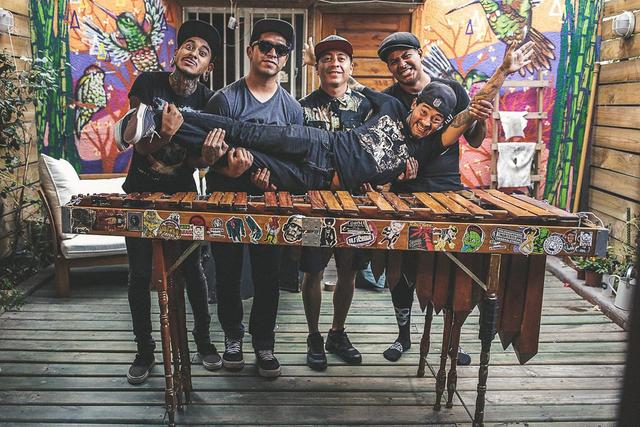
Son Rompe Pera
Born and raised in the deep outskirts of Mexico City, the Gama brothers are keeping alive the rich legacy of marimba music running through their family with their latest project, Son Rompe Pera. While firmly rooted in the tradition of this historic instrument, their fresh take on the folk icon challenges its limits as never before, moving it into the garage/punk world of urban misfits and firmly planting it in the 21st century. Originally performing alongside their father at local events as kids, they now find themselves at the forefront of the contemporary international cumbia scene with their sonic explorations of the classic marimba. Their absolutely unique blend comes from a typical youthful rebellion, when as teenagers they left behind their upbringing and began to play in various punk, rockabilly and ska bands. Now they’ve gone full circle with the return of the marimba on lead, and mixing all of their influences together with an energetic take on the popular instrument, giving it a new twist never before seen in Mexican folk music. Their live shows are a sweaty mess of dancing fans, and this garage-cumbia-marimba-punk band (the only band of its kind in the world) never disappoints on stage. Their authenticity shines through as they give their modern interpretation of Mexican, Peruvian, and Colombian classics, as well as their own original material and some surprise covers. The contrast of the traditional marimba with their youthful attitude and street sense connects the audience to the past while dancing into the future. Formed in 2017, Son Rompe Pera broke onto the potent cumbia scene of today as the marimba duo of brothers Jesús Ángel and Allan Gama (Kacho and Mongo), who inherited this tradition from their father, Batuco. A marimba player by trade, he taught them to play and understand the marimba, which they first used to revive old folk songs for their friends, family, and passers-by on the street. They then incorporated it into the performance of popular Mexican cumbia songs, while spicing things up with an animated identity of their own, creating rhythms of an imaginary repertoire that grows, spreads, and connects the Americas with every passing year. Son Rompe Pera is currently made up of five musicians, (conga, percussion, güiro, drums, guitar, bass and marimba) who develop a full live sound with strong Pan-Latino representation. After a chance meeting in the La Lagunilla market in Mexico City, they were invited to Chile in 2017, where they played over forty gigs at some of the biggest festivals in the country, while also spending weekends at the famous Persa Bio-Bio street market, keeping alive their legacy as street musicians wherever they went. The band also grabbed the attention of major musicians working in this style, such as Café Tacuba, Celso Piña, Fidel Nadal and the Chileans Sonora de Llegar, Santaferia, Anarkia Tropical and the singer Aldo Asenjo, AKA Macha, who has incorporated the Mexican musicians into his three bands Chico Trujillo, La Floripondio, and Bloque Depresivo. In Chile they also took advantage of staying at the mythical Perros con Tiña studio, where they continued to develop their sound and were able to record their first record, loaded with famous guests from the current Chilean music scene. The album, Batuco, due out on the ZZK label imprint, AYA Records, on February 28th, 2020, is named after their recently deceased father, and is a representation of everything he taught them growing up, plus their first steps into a new, international career. In their own words: “The basics of Son Rompe Pera have been developing since we were kids, and the music and streets are in our blood. We found the markets flooded with old, forgotten folk music, and so as kids we decided to carry the marimba with us and create this musical project from our own roots, mixing in rhythms which we thought would never be musical brothers, like cumbia, punk, and the sounds of our barrios and our everyday lives.” The marimba is an idiophone percussion instrument, similar in form to a xylophone. Xylophones are widely used in central and western African music, and were taken to Latin America during the conquest and colonization. The term marimba comes from the Bantu marimba or malimba. The word is formed from ma, or “many”, and rimba “single-bar xylophone.” It consists of a series of wooden strips of different sizes, arranged from largest to smallest, which are struck with mallets to produce musical notes. Each key has its own resonator and the instrument as a whole is fixed into a frame with legs.