
World Music

Africa Express
Africa Express was founded in 2006 to promote the concept of musical collaboration that breaks down boundaries and borders, whether between geographical regions, genres or generations. It has hosted a series of remarkable adventures that have won praise from artists, audiences and critics alike. These include five trips bringing together artists in Africa, four acclaimed albums and a series of inventive and highly-original shows in Britain, Europe and Africa. Past projects include a train tour around the United Kingdom as part of the 2012 Olympic festivites, playing the New Shrine in Lagos, performing to 50,000 people on a beach in Spain, staging the first show in front of Paris’s Hotel de Ville, reforming a 50-strong Syrian orchestra and recording the only African version of Terry Riley’s contemporary classic In C.
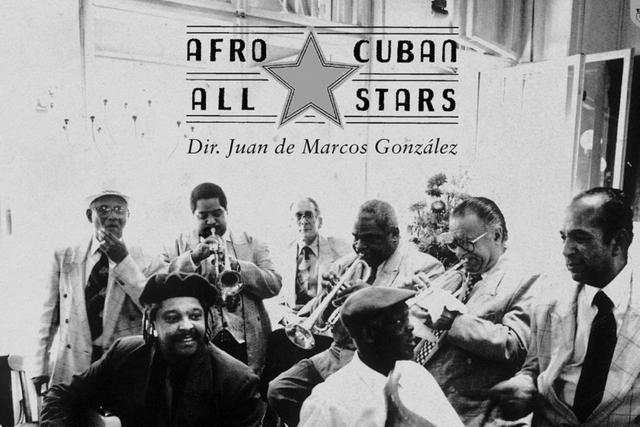
Afro-Cuban All Stars
Afro-Cuban All Stars is a Cuban band led by Juan de Marcos González (formerly tres player for Sierra Maestra). Their music is a mix of all the styles of Cuban music, including bolero, chachachá, salsa, son montuno, timba, guajira, danzón, rumba and abakua. They are known internationally for their 1997 album A Toda Cuba le Gusta, which was recorded at the Buena Vista Social Club sessions. Members have included Rubén González, Orlando "Cachaíto" López, Ibrahim Ferrer, Raúl Planas, Pío Leyva, Manuel "Puntillita" Licea, Félix Baloy, Yanko Pisaco and more recently Caridad Hierrezuelo and Pedro Calvo. In early 1996 Nick Gold, head of World Circuit Records, invited Ry Cooder to participate in an experiment combining Cuban and African musicians. A group of Cuban musicians had already been assembled, including Rubén González as the selected pianist. However, since the African musicians had experienced difficulties in obtaining visas, the focus changed to recording Cuban music instead. So, in March 1996, Gold and Juan de Marcos González (previously the tres player of Sierra Maestra) produced A Toda Cuba le Gusta, the first album by the Afro-Cuban All Stars, recorded at the EGREM Studios in Havana and featuring Rubén González (piano), Orlando "Cachaíto" López (bass), along with a big band of veteran Cuban musicians and singers, most of whom had careers that went back to the 1950s Havana scene: Ibrahim Ferrer, Pío Leyva, Manuel 'Puntillita' Licea, Raúl Planas, Félix Baloy, and José Antonio "Maceo" Rodríguez. Cooder also played slide guitar on one track, "Alto Songo". In the sleeve notes, de Marcos González, who directed the project and played tres, wrote: "This album is dedicated to Rubén González, genius of Cuban piano". During follow-on sessions also held at EGREM Studios in March 1996, Cooder then produced the Grammy winning Buena Vista Social Club, featuring Rubén González (piano), Compay Segundo, Ibrahim Ferrer, Omara Portuondo and Eliades Ochoa, supported by much of the same band that had recorded the Afro-Cuban All Stars album, and with Juan de Marcos González now acting as A & R Consultant. Cooder played guitars on all but one track. Finally, in April 1996 and using left over studio time after the sessions that had produced the previous two albums, the solo album Introducing...Rubén González was recorded in just two days, live with no overdubs. On the album's outer cover, Cooder is quoted as saying: "The greatest piano soloist I have ever heard in my entire life. A Cuban cross between Thelonious Monk and Felix the Cat". All three albums were released on Nick Gold's World Circuit Records in 1997. In early 1998, Wim Wenders filmed a documentary entitled Buena Vista Social Club, and the entire group of Cuban artists became famous worldwide.
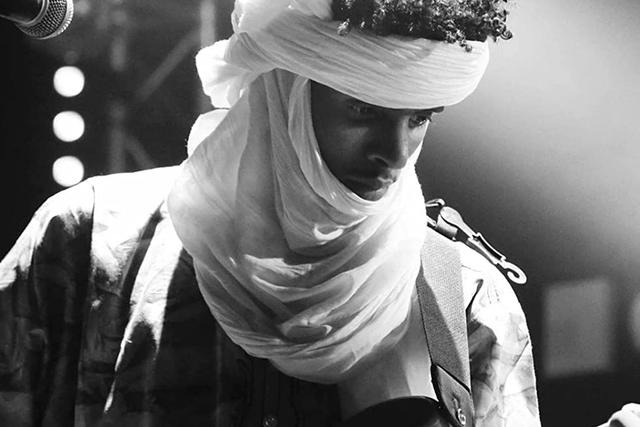
Ahmoudou Madassane
Ahmoudou Madassane is an actor and writer, known for Zerzura (2017) and Akounak tedalat taha tazoughai (2015).

Ali Farka Toure
Ali Ibrahim "Ali Farka" Touré (31 October 1939 – 6 March 2006) was a Malian singer and multi-instrumentalist, and one of the African continent's most internationally renowned musicians. His music is widely regarded as representing a point of intersection of traditional Malian music and its North American cousin, the blues. The belief that the latter is historically derived from the former is reflected in Martin Scorsese's often quoted characterization of Touré's tradition as constituting "the DNA of the blues". Touré was ranked number 76 on Rolling Stone's list of "The 100 Greatest Guitarists of All Time" and number 37 on Spin magazine's "100 Greatest Guitarists of All Time". Source Wikipedia

Anoushka Shankar
Anoushka Shankar (born 9 June 1981 is a British Indian sitar player and composer. She is the daughter of Pandit Ravi Shankar and Sukanya Rajan, and the half-sister of Norah Jones. Early life Shankar was born in London and her childhood was divided between London and Delhi. She is the daughter of Sukanya Shankar and Indian sitar maestro Ravi Shankar, who was 61 when she was born. Through her father, she is also the half-sister of American singer Norah Jones (born Geetali Norah Shankar), and Shubhendra "Shubho" Shankar, who died in 1992. As a teenager, Shankar lived in Encinitas, California, and attended San Dieguito High School Academy. A 1999 honors graduate and Homecoming Queen, Anoushka decided to pursue a career in music rather than attend college. Career Shankar began training on the sitar with her father Ravi Shankar at the age of seven. As part of her training, she began accompanying him on the tanpura at his performances from the age of ten, soaking up the music and becoming acclimated to the stage. She gave her first public sitar performance on 27 February 1995 at the age of 13, at Siri Fort in New Delhi as part of her father's 75th birthday celebration concert. For this solo debut, she was accompanied by tabla maestro Zakir Hussain. Her first experience in the recording studio came that same year when Angel Records released a special four-CD box set called In Celebration, to mark her father's birthday. By the age of fourteen, she was accompanying her father at concerts around the world. At fifteen, she assisted her father on the landmark album Chants of India, produced by George Harrison. Under both their guidance, she was in charge of notation and eventually of conducting the performers who took part in the record. After this experience, the heads of Angel Records came to her parents' home to ask to sign her, and Shankar signed her first exclusive recording contract with Angel/EMI when she was sixteen. She released her first album, Anoushka, in 1998, followed by Anourag in 2000. In 1999 Shankar graduated from high school with honors, but decided against university in favour of beginning to tour as a solo artist. Both Shankar and her half-sister Norah Jones were nominated for Grammy awards in 2003 when Anoushka became the youngest nominee in the World Music category for her third album, Live at Carnegie Hall. Having released three albums of Indian classical music, Shankar took several years away from recording and focused her energy on establishing herself as a solo concert performer outside of her father's ensemble. In that time, she toured worldwide, playing an average of 50–60 concerts per year. 2005 brought the release of her fourth album RISE, her first self-produced, self-composed, non-classical album, earning her another Grammy nomination in the Best Contemporary World Music category. In February 2006 she became the first Indian to play at the Grammy Awards, playing material from RISE. Shankar, in collaboration with Karsh Kale, released Breathing Under Water on 28 August 2007. It is a mix of classical sitar and electronica beats and melodies. Notable guest vocals included her paternal half-sister Norah Jones, Sting, and her father, who performed a sitar duet with her. In 2011 Shankar signed with record label Deutsche Grammophon as an exclusive artist. This marked the beginning of a prolific recording and creative period for Shankar, during which time she continued to refine the sitar sound and musical ideas she had become known for. She earned a third Grammy Award nomination in 2013 for Traveller, an exploration of the shared history between flamenco and Indian classical music, which was produced by Javier Limón and featured artists such as Buika, Pepe Habichuela and Duquende. As Shankar had begun to do with Rise, she created a specially handpicked ensemble of musicians with whom to perform this cross-genre music, and played over a hundred concerts worldwide in support of Traveller. In 2013 she released a personal album called Traces of You, which was released several months after the passing of her father Ravi Shankar. Produced by Nitin Sawhney, and featuring her half-sister Norah Jones as the sole vocal performer, Traces of You earned Shankar a fourth Grammy nomination in the World Music category. In July 2015 Shankar released Home, her first purely classical album of Indian Ragas. Self-composed and produced, Home was recorded over a week in October 2014 in Shankar's new, purpose-built home-studio. Shankar has made many guest appearances on recordings by other artists, among them Sting, Lenny Kravitz, Thievery Corporation and Nitin Sawhney. Recently, Shankar has collaborated with Herbie Hancock on his latest record The Imagine Project, and with Rodrigo y Gabriela on their album Area 52. Duets with artists such as violinist Joshua Bell, in a sitar-cello duet with Mstislav Rostropovich, and with flautist Jean-Pierre Rampal, playing both sitar and piano, Shankar has championed her father's compositions. Shankar also performs Ravi Shankar's 1st and 2nd Concertos for Sitar and Orchestra, performing multiple times under legendary conductors such as Zubin Mehta. In January 2009 she was the sitar soloist alongside the Orpheus Chamber Orchestra premiering her father's 3rd Concerto for Sitar and Orchestra, and in July 2010 she premiered Ravi Shankar's first symphony for sitar and orchestra with the London Philharmonic Orchestra at London's Royal Festival Hall. In April 2016, Shankar performed with violinist Patricia Kopatchinskaja during a concert in Konzerthaus Berlin, Germany. The Raga Piloo was originally composed, performed and recorded by Ravi Shankar as a duet with Yehudi Menuhin on the album West Meets East, Volume 2 in 1968. ‘Love Letters’ marks a different direction for the internationally celebrated artist; it offers a shift in intimacy and content and comes at a pivotal time in her career as she signs to her new record label, Mercury KX. A host of trail-blazing women feature on ‘Love Letters’ including singer and co-producer Alev Lenz, twin sister vocal duo Ibeyi, singer and cellist Ayanna Witter-Johnson, renowned Indian singer Shilpa Rao, Brooklyn-based mastering engineer Heba Kadry (Björk, Slowdive) and British audio mastering engineer Mandy Parnell (Aphex Twin, The XX). On 13 November 2020, Shankar was featured on "Stop Crying Your Heart Out" as part of the BBC Radio 2's Allstars' Children in Need charity single. The single debuted at number 7 on the Official UK Singles Chart and number 1 on both the Official UK Singles Sales Chart and the Official UK Singles Download Chart
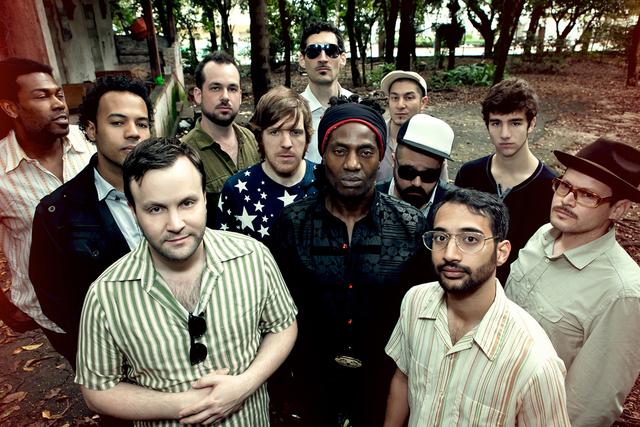
Antibalas
Antibalas (Spanish for "bulletproof") is an American, Brooklyn-based afrobeat band that is modeled after Fela Kuti's Africa 70 band and Eddie Palmieri's Harlem River Drive Orchestra. Although their music generally follows the musical architecture and language of afrobeat, it incorporates elements of jazz, funk, dub, improvised music, and traditional drumming from Cuba and West Africa. History Founded in 1998 by Martín Perna as "Conjunto Antibalas", the group first performed on May 26, 1998, at St. Nicks Pub in Harlem at a poetry night organized by renowned visual artist Xaviera Simmons. Over the course of the next few months, the group solidified with a core of eleven band members and expanded their repertoire of original songs. For the first year of the group's existence, they performed exclusively at non-commercial venues such as block parties, lofts, and public parks, before securing a Friday night residency at the now-defunct NoMoore in August 1999. Called Africalia!, the residency lasted from August 1999 till April 2001, when the club was shut down by fire officials during the Giuliani administration's crackdown on nightclubs and cabarets. Guitarist and producer/engineer Gabriel Roth wrote several of the earlier tunes and oversaw recording and production of the first three records. Over the next few years, the band's presence grew; by summer 2000 Antibalas had released their first album Liberation Afrobeat Vol. 1 and had toured twice in England, while continuing to play at venues throughout New York City. Recording with the group in the early days was Cameroonian drummer Jojo Kuo, who can be heard on the studio recordings of "Uprising" and "Machete". By early 2002, the horn-driven outfit had released their second album, Talkatif, and continued to tour throughout the United States and Europe. In summer 2004, their third studio album, Who is This America?, was released on Ropeadope Records. Antibalas's album, Security, was produced by John McEntire and released on the ANTI- label in 2007. Antibalas has performed in 35 countries, from Japan to Turkey to Portugal to Australia, and throughout New York City, from Carnegie Hall to Central Park Summerstage to the Rikers Island prison facility. The group has received guest visits from several musicians from Fela Kuti's Afrika 70 and Egypt 80 bands, including Tony Allen (drums), Femi Kuti (alto sax), Seun Kuti (tenor sax), Tunde Williams (trumpet), Oghene Kologbo (guitar), Nicolas Addey (congas), Dele Sosimi (keyboards), Ola Jagun (drums/percussion), and Jojo Kuo (drums) among others. In the summer of 2008, Antibalas was featured off-Broadway in Fela!, a musical celebrating the life of Fela Kuti. The group arranged and performed the show's score of music originally performed by Kuti. In the fall of 2009, Fela! opened on Broadway at the Eugene O'Neill Theatre, once again with Antibalas. In 2010, the band released their Rat Race EP, with an arrangement of Bob Marley's "Rat Race" featuring Amayo on vocals, as well as "Se Chifló" featuring Chico Mann as vocalist. In 2011, the band reunited with producer and former Antibalas guitarist Gabriel Roth at Daptone Studios in Bushwick, Brooklyn, to record their fifth full-length album, entitled Antibalas. The album was released on August 7, 2012, on the Daptone label. The band resumed a heavy touring schedule beginning in April 2012 with their debut tour in Brazil, performing in São Paulo and Recife, and kicked off a US tour at the Outsidelands Festival in San Francisco, followed by a tour of California. On August 24, 2012, Antibalas made their national television debut, performing their single "Dirty Money" on NBC's Late Night with Jimmy Fallon. On September 11, they resumed their US/Canada tour with 30 dates in the Midwest, East Coast, Southeast and Gulf Coast, including the Austin City Limits Festival. On October 4, they appeared on NPR's Tiny Desk Concerts. The band toured in Europe in October and November 2012, followed by an Australian tour in March 2013 . In May of the same year Antibalas visited Mexico for first time, performing in Puebla "Festival 5 de Mayo" with originals members like Victor Axelrod. In 2015, The Antibalas horn section collaborated with The Dap-Kings horn section, Mark Ronson, and Bruno Mars to record Uptown Funk and other tracks off of Mark Ronson's 2015 album Uptown Special. They also performed Uptown Funk together on Saturday Night Live in November 2014.

Atahualpa Yupanqui
Atahualpa Yupanqui (Spanish pronunciation: [ataˈwalpa ʃuˈpaŋki]; born Héctor Roberto Chavero Aramburu; 31 January 1908 – 23 May 1992) was an Argentine singer, songwriter, guitarist, and writer. He is considered the most important Argentine folk musician of the 20th century. Biography Yupanqui was born Héctor Roberto Chavero Aramburu in Pergamino (Buenos Aires Province), in the Argentine pampas, about 200 kilometers away from Buenos Aires. His father was a mestizo descended from indigenous people, while his mother was born in the Basque country. His family moved to the Northwest city of Tucumán when he was nine. In a bow to two legendary Incan kings, he adopted the stage name Atahualpa Yupanqui, which became famous all around the world. In his early years, Yupanqui traveled extensively through the northwest of Argentina and the Altiplano studying the indigenous culture. He became politically active and joined the Communist Party of Argentina. In 1931, he took part in the failed Kennedy brothers uprising against the de facto government of José Félix Uriburu and in support of deposed president Hipólito Yrigoyen. After the uprising was defeated, he was forced to seek refuge in Uruguay. He returned to Argentina in 1934. In 1935, Yupanqui paid his first visit to Buenos Aires; his compositions were growing in popularity, and he was invited to perform on the radio. Shortly thereafter, he made the acquaintance of pianist Antonieta Paula Pepin Fitzpatrick, nicknamed "Nenette", who became his lifelong companion and musical collaborator under the pseudonym "Pablo Del Cerro". Because of his Communist Party affiliation (which lasted until 1952), his work suffered from censorship during Juan Perón's presidency; he was detained and incarcerated several times. He left for Europe in 1949. Édith Piaf invited him to perform in Paris on 7 July 1950. He immediately signed a contract with "Chant Du Monde", the recording company that published his first LP in Europe, "Minero Soy" (I am a Miner). This record won first prize for Best Foreign Disc at the Charles Cros Academy, which included three hundred fifty participants from all continents in its International Folklore Contest He subsequently toured extensively throughout Europe. In 1952, Yupanqui returned to Buenos Aires. He broke with the Communist Party, which made it easier for him to book radio performances. While with Nenette they constructed their house on Cerro Colorado (Córdoba). Recognition of Yupanqui's ethnographic work became widespread during the 1960s, and nueva canción artists such as Facundo Cabral, Mercedes Sosa and Jorge Cafrune recorded his compositions and made him popular among the younger musicians, who referred to him as Don Ata. Yupanqui alternated between houses in Buenos Aires and Cerro Colorado, Córdoba province. During 1963–1964, he toured Colombia, Japan, Morocco, Egypt, Israel, and Italy. In 1967, he toured Spain, and settled in Paris. He returned regularly to Argentina and appeared in Argentinísima II in 1973, but these visits became less frequent when the military dictatorship of Jorge Videla came to power in 1976. In February 1968, Yupanqui was named a Knight of the Ordre des Arts et des Lettres of France by the Ministry of Culture of that country, in honor of 18 years work enriching the literature of the French nation. Some of his songs are included in the programs of Institutes and Schools where Castilian Literature is taught. In 1985, the Konex Foundation from Argentina granted him the Diamond Konex Award, one of the most prestigious awards in Argentina, as the most important Popular Musician in the last decade in his country. In 1989, an important cultural center of France, the University of Nanterre, asked Yupanqui to write the lyrics of a cantata to commemorate the Bicentennial of the French Revolution. The piece, entitled "The Sacred Word" (Parole sacrée), was released before high French authorities. It was not a recollection of historical facts but rather a tribute to all the oppressed peoples that freed themselves. Yupanqui died in Nîmes, France in 1992 at the age of 84; his remains were cremated and dispersed on his beloved Colorado Hill on 8 June 1992.

Ayub Ogada
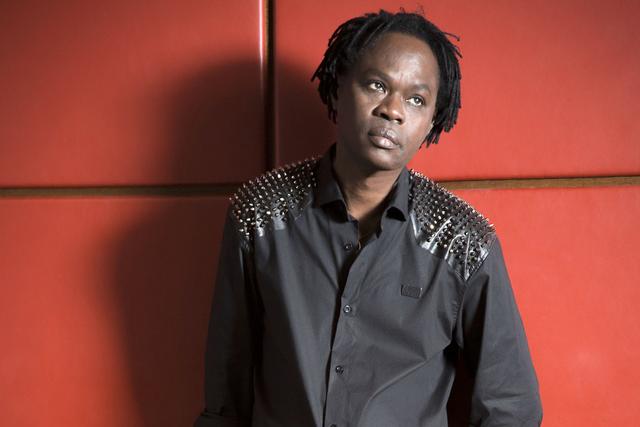
Baaba Maal
Baaba Maal (born 12 November 1953) is a Senegalese singer and guitarist born in Podor, on the Senegal River. He is well known in Africa and internationally and is one of Senegal's most famous musicians. In addition to acoustic guitar, he also plays percussion. He has released several albums, both for independent and major labels. In July 2003, he was made a UNDP Youth Emissary. Maal sings primarily in Pulaar and is the foremost promoter of the traditions of the Pulaar-speaking people, who live on either side of the Senegal River in the ancient Senegalese kingdom of Futa Tooro. Early life and education Maal was expected to follow in his father's profession and become a fisherman. However, under the influence of his lifelong friend and family gawlo, blind guitarist Mansour Seck, Maal devoted himself to learning music from his mother and his school's headmaster. He went on to study music at the university in Dakar before leaving for postgraduate studies on a scholarship at Beaux-Arts in Paris.

Beirut
Beirut is an American band which was originally the solo musical project of Santa Fe native Zach Condon. Beirut's music combines elements of indie-rock and world music. The band's first performance was in New York, in May 2006, to support its debut album, Gulag Orkestar. Condon named the band after Lebanon’s capital, because of the city’s history of conflict and as a place where cultures collide. Beirut performed in Lebanon for the first time in 2014, at the Byblos International Festival. Early years Zach Condon was born in Albuquerque, New Mexico, on February 13, 1986. He grew up in Newport News, Virginia, and in Santa Fe. Condon played trumpet in a jazz band as a teenager and cites jazz as a major influence. Condon attended Santa Fe High School, until dropping out aged 17. Santa Fe's proximity to Mexico exposed Condon to mariachi music. Work at a cinema showing international films piqued his interest in Fellini arias, Sicilian funeral brass and Balkan music. Cordon attended community college for a short period, before traveling to Europe at the age of 17 with his older brother, Ryan. Condon's exploration of world music developed Beirut's melodic sound. Zach's younger brother Ross Condon played in the Brooklyn-based band Total Slacker. Gulag Orkestar Returning from Europe Condon enrolled at the University of New Mexico, where he studied Portuguese and photography. Condon recorded most of the material for Gulag Orkestar alone in his bedroom, finishing the album in a studio with Jeremy Barnes (Neutral Milk Hotel, A Hawk and a Hacksaw) and Heather Trost (A Hawk and a Hacksaw), who became early contributors to the band. Ba Da Bing! records signed Condon on the strength of the recordings. Condon recruited friends to play Gulag Orkestar's first live shows in New York in May 2006. Beirut's first music video was for "Elephant Gun". The second video, for "Postcards from Italy", was directed by Alma Har'el. Lon Gisland EP was the full band's first release, in 2007.

Bertrand Belin
Bertrand Belin is a French singer, guitarist and writer, born on December 7 , 1970 in Quiberon ( Morbihan ). Bertrand Belin was born and raised in Quiberon, along with four siblings, a stay-at-home mom and a fisherman's father. In 1989 , he met the Cajun band and zydeco Stompin 'Crawfish, with whom he toured for six years and recorded two albums. In 1996, he toured with the British group Sons of the Desert, for the release of the second album Greedy, then recorded with him the album Good night noises everywhere, at Universal Jazz. His debut album, Bertrand Belin, was released in 2005. La Perdue, his second album, appears in 2007. In addition to his career as a singer-songwriter, he also composes music for shows and films, including Marinette by Blandine Lenoir, prize for best music at the 1999 Clermont-Ferrand festival. He is also seen in the stage adaptation of Olivier Libaux 's Imbécile, directed by Olivier Martinaud, alongside JP Nataf, Armelle Pioline and Barbara Carlotti. It has also been seen since 2007 in Philippe Decouflé's show Sombreros alongside Sébastien Libolt . He published in 2010 Hypernuit, critically acclaimed album. He received for this third opus the Grand Prix du Disque of the Académie Charles-Cros 2010. In 2011, he writes and interprets a musical fiction, Cachalot?, whose action takes place around the Grosbois counter-tank. Bertrand Belin directed in 2013 the 4 tracks Sunnight by Fiodor Dream Dog, released on the label La Gosse Productions. On May 27, 2013, Betrand Belin unveils Parks, his fourth album. October 9, 2015 released his fifth album, Cap Waller. He is laureate in 2016 of the price Raoul Breton, awarded by SACEM. In 2018 , he participated in the album Shadow People of The Limiñanas on the title Sunday where he lends his voice. He has also published three novels at POL: Shark, Littoral and Large carnivores.
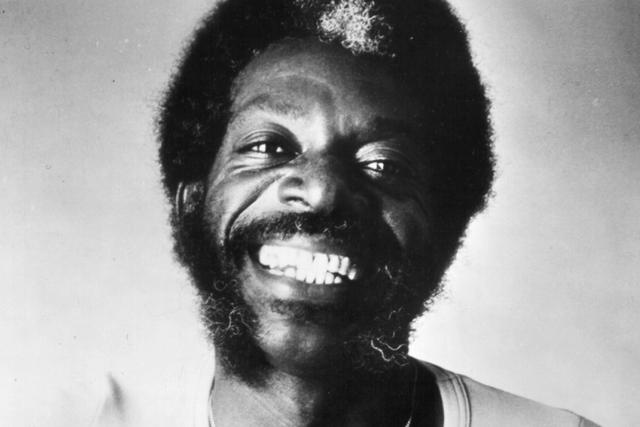
Bola Sete
Bola Sete (born Djalma de Andrade) (July 16, 1923 – February 14, 1987) was a Brazilian guitarist. Sete played jazz with Vince Guaraldi and Dizzy Gillespie. History Born in Rio de Janeiro, Bola Sete's name means "Seven Ball". In snooker, which is fairly popular in Brazil, the seven ball is the only black ball on the table (like the eight ball in pool), and Bola got this nickname when he was the only black member of a small jazz group. Sete studied guitar at the Conservatory of Rio. He started performing with his own sextet and local samba groups while he was a student. His early influences were guitarists Django Reinhardt, Charlie Christian, Barney Kessel, George Van Eps, and Oscar Moore of the Nat King Cole Trio. He admired the big bands that were touring South America at that time, led by Dizzy Gillespie, Tommy Dorsey, and Woody Herman. His career started in 1952 when he played clubs and hotels in Italy for four years. Then he returned to Brazil and started touring all of South America, during which time the manager of Sheraton Hotels noticed him and decided to bring him to the US to play in the hotels. He played for New York's Park Sheraton, then moved to San Francisco to play in the Sheraton Palace. Dizzy Gillespie was staying there at the time and listening to Sete playing every day. When Gillespie brought his pianist, Lalo Schifrin, to the hotel, he discovered that Schifrin and Sete had played together in Argentina. This meeting was the beginning of Sete's success in the US. In the fall of 1962, Gillespie took Sete to the Monterey Jazz Festival, where he enjoyed a huge success. Sete toured with Gillespie, then returned to San Francisco, where he joined the Vince Guaraldi trio. He was well known in the US, and his partnership with Guaraldi yielded several well-received recordings. After staying for a couple of years with Guaraldi, Sete formed his own trio with Sebastião Neto on bass and Paulinho da Costa on drums. With this trio, he appeared at the Monterey Jazz Festival in 1966 and released an album of his performance, which peaked at No. 20 on the Billboard Jazz chart. In the 1970s, Sete became friends with guitarist John Fahey, who had been an admirer. In 1975, Sete's album Ocean was released on Fahey's label, Takoma Records.

Buena Vista Social Club
Buena Vista Social Club is an ensemble of Cuban musicians established in 1996 to revive the music of pre-revolutionary Cuba. The project was organized by World Circuit executive Nick Gold, produced by American guitarist Ry Cooder and directed by Juan de Marcos González. They named the group after the homonymous members' club in the Buenavista quarter of Havana, a popular music venue in the 1940s. To showcase the popular styles of the time, such as son, bolero and danzón, they recruited a dozen veteran musicians, many of whom had been retired for many years. The group's eponymous album was recorded in March 1996 and released in September 1997, quickly becoming an international success, which prompted the ensemble to perform with a full line-up in Amsterdam and New York in 1998. German director Wim Wenders captured the performance on film for a documentary—also called Buena Vista Social Club—that included interviews with the musicians conducted in Havana. Wenders' film was released in June 1999 to critical acclaim, receiving an Academy Award nomination for Best Documentary feature and winning numerous accolades including Best Documentary at the European Film Awards. This was followed up by a second documentary Buena Vista Social Club: Adios in 2017. The success of both the album and film sparked a revival of interest in traditional Cuban music and Latin American music in general. Some of the Cuban performers later released well-received solo albums and recorded collaborations with stars from different musical genres. The "Buena Vista Social Club" name became an umbrella term to describe these performances and releases, and has been likened to a brand label that encapsulates Cuba's "musical golden age" between the 1930s and 1950s. The new success was fleeting for the most recognizable artists in the ensemble: Compay Segundo, Rubén González, and Ibrahim Ferrer, who died at the ages of ninety-five, eighty-four, and seventy-eight respectively; Compay Segundo and González in 2003, then Ferrer in 2005. Several surviving members of the Buena Vista Social Club, such as veteran singer Omara Portuondo, trumpeter Manuel "Guajiro" Mirabal, laúd player Barbarito Torres and trombonist and conductor Jesús "Aguaje" Ramos currently tour worldwide, to popular acclaim, with new members such as singer Carlos Calunga and pianist Rolando Luna, as part of a 13-member band called Orquesta Buena Vista Social Club. The original Buenavista Social Club Abandoned building in Almendares, Marianao, that housed the Buenavista Social Club in the 1940s. The Buenavista Social Club was a members-only club originally located in Buenavista (literally fair view), a quarter in the current neighbourhood of Playa (before 1976 part of Marianao), one of the 15 municipalities in Cuba's capital, Havana. The original club was founded in 1932 in a small wooden venue at calle Consulado y pasaje "A" (currently calle 29, n. 6007). In 1939, due to lack of space the club relocated to number 4610 on Avenue 31, between calles 46 and 48, in Almendares, Marianao. This location is recalled by Juan Cruz, former director of the Marianao Social Club and master of ceremonies at the Salón Rosado de la Tropical (other nightclubs in Havana). As seen in the Buena Vista Social Club documentary, when musicians Ry Cooder, Compay Segundo and a film crew attempted to identify the location of the club in the 1990s, local people could not agree on where it had stood. At the time, clubs in Cuba were segregated; there were sociedades de blancos (white societies), sociedades de negros (black societies), etc. The Buenavista Social Club operated as a black society, which was rooted in a cabildo. Cabildos were fraternities organized during the 19th century by African slaves. The existence of many other black societies such as Marianao Social Club, Unión Fraternal, Club Atenas (whose members included doctors and engineers), and Buenavista Social Club, exemplified the remnants of institutionalized racial discrimination against Afro-Cubans. These societies operated as recreational centers where workers went to drink, play games, dance and listen to music. In the words of Ry Cooder, Society in Cuba and in the Caribbean including New Orleans, as far as I know, was organized around these fraternal social clubs. There were clubs of cigar wrappers, clubs for baseball players and they'd play sports and cards—whatever it is they did in their club—and they had mascots, like dogs. At the Buena Vista Social Club, musicians went there to hang out with each other, like they used to do at musicians' unions in the U.S., and they'd have dances and activities. As a music venue, the Buenavista Social Club experienced the peak of Havana's nightclub life, when charangas and conjuntos played several sets every night, going from club to club over the course of a week. Often, bands would dedicate songs to the clubs where they played. In the case of the Buenavista Social Club, an eponymous danzón was composed by Israel López "Cachao" in 1938, and performed with Arcaño y sus Maravillas. In addition, Arsenio Rodríguez dedicated "Buenavista en guaguancó" to the same place. Together with Orquesta Melodías del 40, the Maravillas and Arsenio's conjunto were known as Los Tres Grandes (The Big Three), drawing the largest audiences wherever they played. These vibrant times in Havana were described by pianist Rubén González, who played in Arsenio's conjunto, as "an era of real musical life in Cuba, when there was very little money to earn, but everyone played because they really wanted to".

Calexico
Calexico is a Tucson, Arizona-based Americana, Tex-Mex, indie rock band. The band's two main members, Joey Burns and John Convertino, first played together in Los Angeles as part of the group Giant Sand. They have recorded a number of albums on Quarterstick Records, while their 2005 EP In the Reins, recorded with Iron & Wine, has reached the Billboard 200 album charts. Their musical style is influenced by traditional Latin sounds of mariachi, conjunto, cumbia, and tejano mixed with country, jazz, and post-rock. The band is named for the border town of Calexico, California, and has been described by some as "desert noir". Formation Calexico had its origins in 1990 when Joey Burns, who was studying music at the University of California, Irvine, met up with John Convertino, who was playing drums with Howe Gelb in Giant Sand. Burns joined them, after first playing upright bass on a European tour. Giant Sand moved to Tucson, Arizona in 1994. Burns and Convertino formed the Friends of Dean Martin (later the Friends of Dean Martinez) which scored a record deal with Sub Pop. However, the pair split up with Bill Elm, the co-founder of The Friends of Dean Martinez in 1996. The band subsequently became a kind of indie rhythm section for hire, working with the likes of Victoria Williams, Barbara Manning and Richard Buckner before forming Calexico.
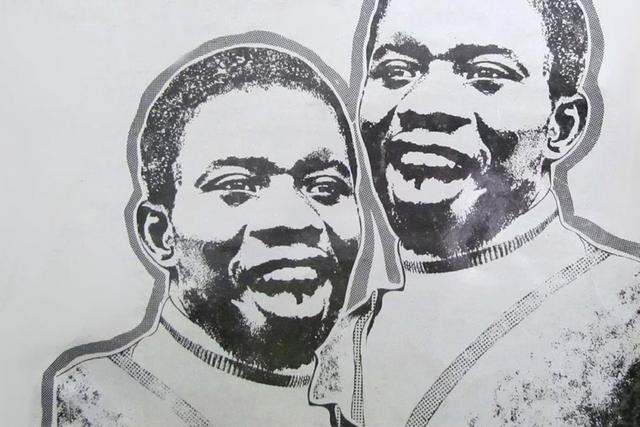
Celestine Ukwu
Celestine Ukwu (1940 – 7 May 1977) was a Nigerian Igbo highlife musician during the 1960s and 1970s, best known for his hit songs "Ije Enu", "Igede" and "Money Palava". Described as a "prolific and outstanding composer" by music critic Benson Idonije of Radio Nigeria Two, Ukwu's works have been featured on various world music compilations including The Rough Guide to Highlife and The Rough Guide to Psychedelic Africa. Life Ukwu was born in Enugu to music-oriented parents. His father was a local performer of the igede, ikpa and ode genres of Igbo music while his mother was lead singer in a women's musical group. At a young age, he began learning how to read music and play the harmonium with the help of his uncle. Upon completing his primary school education, he went to teacher training school for two years but dropped out to pursue music as a career. He went on to join Mike Ejeagha's group Paradise Rhythm Orchestra in 1962 at Enugu as a vocalist and maraca player before he left to join Mr. Picolo's band who were touring the Democratic Republic of the Congo at the time. He returned to Nigeria to form his own band known as Celestine Ukwu & His Music Royals of Nigeria in 1966 which was later disbanded in 1967 following the outbreak of the Nigerian Civil War, before releasing a song at the outbreak of the war titled 'Hail Biafra'. After the war, Ukwu formed another group, Celestine Ukwu & His Philosophers National; with whom he released several albums, including Igede Fantasia which did well commercially Artistry His songs were primarily composed in Igbo language with a bit of Efik. In a 1986 edition of Thisweek, a writer once wrote that his songs "gave a food for thought to its listeners".
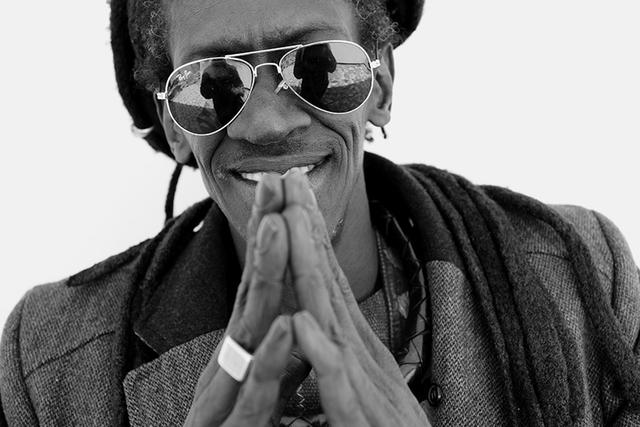
Cheikh Lô
He was born in the late 1950s to Senegalese parents in Bobo Dioulasso in Burkina Faso and began playing drums and singing at an early age. He joined Orchestre Volta Jazz, a Bobo variety band that played Cuban and Congolese pop songs as well as traditional Burkinabé music. Lô moved to Senegal in 1978, performing in several mbalax outfits. By then, the Zairean sound was in full flower, Camerounian makossa was coming on strong, and reggae had entered the mix, and Lô absorbed everything. In 1985, he was playing guitar with numerous Côte d'Ivoire and French musicians, which led him to record material in Paris in 1987. After his band dissolved, Lô remained in Paris as a session musician, developing his own sound, described as a mix of mbalax, reggae and soukous influences. He spent most of his time in recording studios, and he picked up as much as he could. His casual contacts with Zaire's most successful progressive singer, Papa Wemba, were especially memorable. "I was a drummer. So when there was a group who came and didn't have a drummer, I would practice with them. Papa Wemba's drummer was also a businessman, so if he wasn't there, I would help out. He's from the school of Tabu Ley, and when I was young, I listened to Tabu Ley a lot." In 1995, Youssou N'Dour offered to produce Lô's debut album, Ne La Thiass, which became a success worldwide. In 2000, Lô sang alongside Ibrahim Ferrer on "Choco's Guajira", from Cuban pianist Rubén González's, (Buena Vista Social Club) album Chanchullo. In 2002, he appeared on two tracks of the Red Hot Organization's tribute album to Fela Kuti, Red Hot and Riot. He collaborated with Les Nubians and Manu Dibango on one of the tracks, "Shakara / Lady (Part Two)."
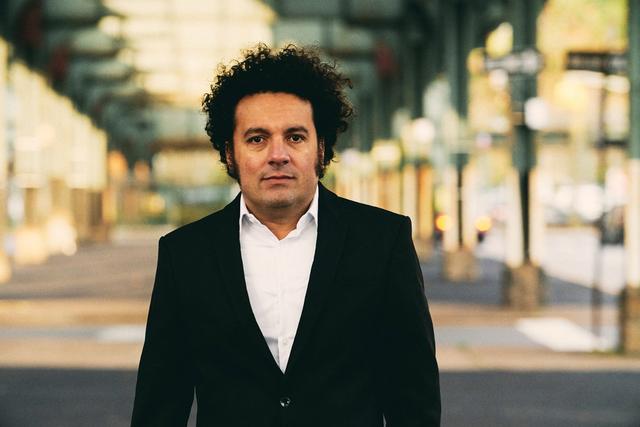
Cheo
Latin GRAMMY winner and former founding member, lead songwriter and guitar player of Los Amigos Invisibles, Jose Luis “Cheo” Pardo, is based in Brooklyn, NY and hails from Caracas, Venezuela. Cheo has compiled a soulful body of tasteful work over the years, including projects released under the names of Locoeach, DJ Afro, Los Crema Paraiso, and Orquesta Discotheque. He has also released over 50 remixes for a wide variety of artists like The Beastie Boys, David Byrne, Devendra Banhart, Julieta Venegas, Natalia Lafourcade, Monsieur Periné and Basement Jaxx. His new album SORPRESA (released on April 2020) includes sounds of Latin Soul, Bossa nova, Disco, Funk, House, and Mambo- this time, all released under his own name.
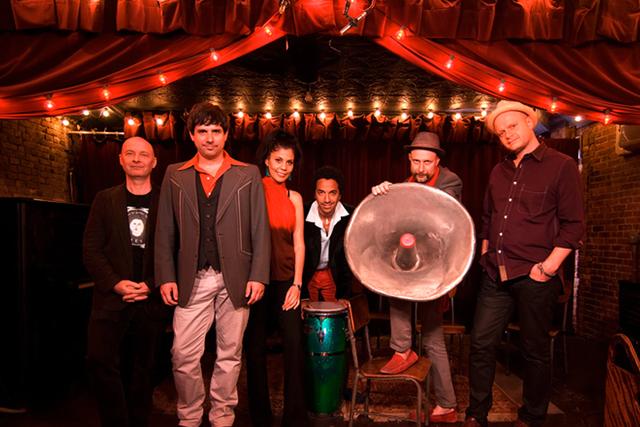
Chicha Libre
Chicha Libre is a Brooklyn-based six-member band founded by Olivier Conan. Its name is a reference to chicha, a corn-based liquor that has been produced in South America since the time of the Incas. It is also the name of a Peruvian musical genre (also known as Peruvian cumbia) on which the band's music is based. History Conan was first introduced to chicha music on a trip to Peru in 2005. Their first album, ¡Sonido Amazonico!, was released in 2008 on Barbes Records, a label which Conan runs from his home in Brooklyn. They released their second album, Canibalismo, in 2012, and an EP, Cuatro Tigres, in 2013, both digitally and on vinyl. The band's original members were Olivier Conan (lead vocalist, cuatro), Josh Camp (DuoVox, keyboards, background vocals), Vincent Douglas (guitar), Greg Burrows (percussion, background vocals, timbales, bongos, guiro, reco-reco), Timothy Quigley (percussion, bongo, shakers, conga) and Nick Cudahy (bass guitar). Additional members are Neil Ochoa (congas) and Karina Colis (timbales). Featured guest artists have included Jose Carballo (a former member of the seminal Peruvian chicha band, Los Hijos del Sol).
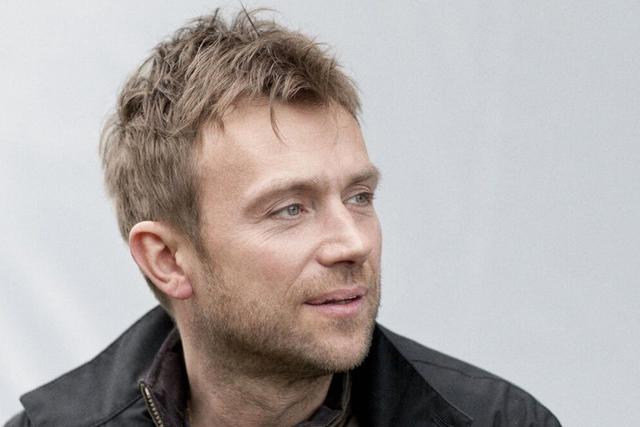
Damon Albarn
Damon Albarn OBE (/ˈdeɪmən ˈælbɑːrn/; born 23 March 1968) is an English musician, singer, songwriter, and record producer, best known as the frontman and primary lyricist of the rock band Blur and as the co-founder, lead vocalist, instrumentalist, and primary songwriter of the virtual band Gorillaz. Raised in Leytonstone, East London, and around Colchester, Essex, Albarn attended the Stanway School, where he met guitarist Graham Coxon and formed Blur, releasing their debut album Leisure in 1991. After spending long periods touring the US, Albarn's songwriting became increasingly influenced by British bands from the 1960s. The result was the Blur albums Modern Life Is Rubbish (1993), Parklife (1994) and The Great Escape (1995). All three albums received critical acclaim while Blur gained mass popularity in the UK, aided by a Britpop chart rivalry with Oasis. Subsequent albums such as Blur (1997), 13 (1999), and Think Tank (2003) incorporated influences from lo-fi, art rock, electronic and world music. These were followed by The Magic Whip (2015), Blur's first studio album in 12 years. Albarn formed the virtual band Gorillaz in 1998 with comic book artist Jamie Hewlett. Drawing influences from hip hop, dub, pop, trip hop, and world music, Gorillaz released their self-titled debut album in 2001 to worldwide success, spawning successful follow-ups Demon Days (2005), Plastic Beach, The Fall (both released in 2010), Humanz (2017), The Now Now (2018) and the first season of their Song Machine project, Song Machine, Season One: Strange Timez (2020). Although Albarn is the only permanent musical contributor, Gorillaz albums typically feature collaborations from a range of artists. Gorillaz are cited by the Guinness Book of World Records as the "Most Successful Virtual Band". Albarn's other notable projects have included two supergroups: the Good, the Bad & the Queen and Rocket Juice & the Moon, working with the non-profit organization Africa Express, which he co-founded, and composing film soundtracks. He also scored the stage productions Monkey: Journey to the West (2008), Dr Dee (2012) and Wonder.land (2016). His debut solo studio album Everyday Robots was released in 2014, with his second The Nearer the Fountain, More Pure the Stream Flows released in 2021. In 2008, The Daily Telegraph ranked Albarn number 18 in their list of the "100 most powerful people in British culture". In 2016, Albarn received the Ivor Novello Award for Lifetime Achievement from the British Academy of Songwriters, Composers and Authors. He was appointed Officer of the Order of the British Empire (OBE) in the 2016 New Year Honours for services to music. In 2020, Albarn was granted Icelandic citizenship.
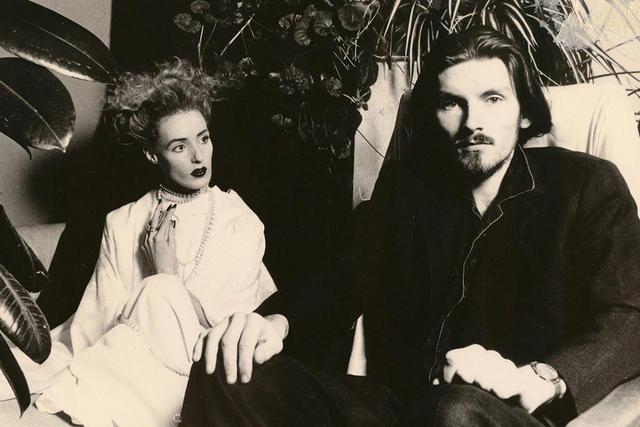
Dead Can Dance
Australian music historian Ian McFarlane described Dead Can Dance's style as "constructed soundscapes of mesmerising grandeur and solemn beauty; African polyrhythms, Gaelic folk, Gregorian chant, Middle Eastern mantras, and art rock." Having disbanded in 1998, they reunited briefly in 2005 for a world tour and reformed in 2011 when they released and toured a new album, Anastasis. Dead Can Dance formed in Melbourne, Australia in August 1981 with Paul Erikson on bass guitar, Lisa Gerrard (ex-Microfilm) on vocals, Simon Monroe (Marching Girls) on drums and Brendan Perry (also of Marching Girls) on vocals and guitar. Gerrard and Perry were a couple who met as members of Melbourne's little band scene. In May 1982, the band left Monroe in Australia and moved to London, England, where they signed with alternative rock label 4AD. With the duo, the initial United Kingdom line-up were Paul Erikson and Peter Ulrich. The group's debut album, Dead Can Dance, was released in February 1984. The artwork, which depicts a ritual mask from New Guinea, "provide[s] a visual reinterpretation of the meaning of the name Dead Can Dance", set in a faux Greek typeface. The album featured "drum-driven, ambient guitar music with chanting, singing and howling", and fit in with the ethereal wave style of label mates Cocteau Twins. They followed with a four-track extended play, Garden of the Arcane Delights in August. AllMusic described their early work as "as goth as it gets" (despite the group themselves rejecting the label), while the EP saw them "plunging into a wider range of music and style". For their second album, Spleen and Ideal, the group comprised the core duo of Gerrard and Perry with cello, trombone and tympani added in by session musicians. Released in November 1985, it was co-produced by the duo and John A. Rivers. Raggett describes it as "a consciously medieval European sound like it was recorded in an immense cathedral". The group built a following in Europe, and the album reached No. 2 on the UK indie charts. By 1989, Gerrard and Perry had separated domestically – Gerrard returned to Australia and Perry moved to Ireland – but still wrote, recorded and performed as Dead Can Dance.
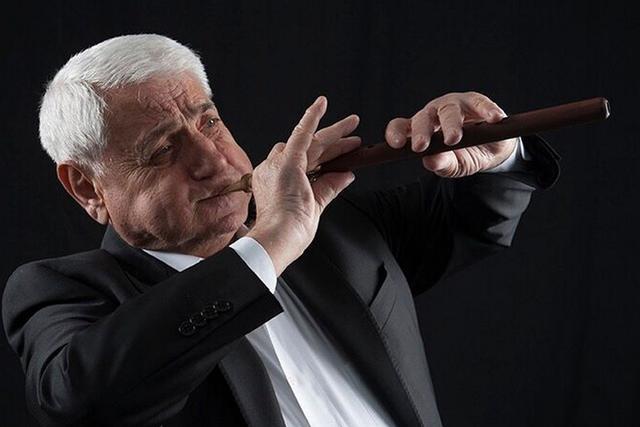
Djivan Gasparyan
Djivan Gasparyan (var. Jivan Gasparyan; Armenian: Ջիվան Գասպարյան, Armenian pronunciation: [dʒiˈvɑn ɡɑspɑɾˈjɑn]; born October 12, 1928) is an Armenian musician and composer. He plays the duduk, a double reed woodwind instrument related to the orchestral oboe. Gasparyan is known as the "Master of the duduk". Biography Born in Solak, Armenia to parents from Mush, Gasparyan started to play duduk when he was six. In 1948, he became a soloist of the Armenian Song and Dance Popular Ensemble and the Yerevan Philharmonic Orchestra. He has won four medals at UNESCO worldwide competitions (1959, 1962, 1973, and 1980). In 1973 Gasparyan was awarded the honorary title People's Artist of Armenia. In 2002, he received the WOMEX (World Music Expo) Lifetime Achievement Award. A professor at the Yerevan State Musical Conservatory, he has instructed and nurtured many performers to professional levels of performance in duduk. In 1998 he released an album with a unique duduk quartet he formed. Creating arrangements for 4 musicians with "new duduk tones, alto and bass, was an extremely difficult task" and challenge, but the quartet did become a reality performing and "there is no other like it in the world", he witnessed in the lines notes of Nazeli. He has toured the world several times with a small ensemble playing Armenian folk music. His music has been chosen on the soundtrack of several international films. He has collaborated with many artists, such as Sting, Peter Gabriel, Hossein Alizadeh, Erkan Ogur, Michael Brook, Brian May, Lionel Richie, Derek Sherinian, Ludovico Einaudi, Luigi Cinque, Boris Grebenshchikov, Brian Eno, David Sylvian, Hans Zimmer and Andreas Vollenweider. He also recorded with the Kronos Quartet and the Los Angeles Philharmonic. Gasparyan played as part of the Armenian entry "Apricot Stone" by Eva Rivas at the 2010 Eurovision Song Contest in Oslo and became the oldest ever person to feature in a Eurovision Song Contest performance, but was not officially listed as a guest artist.
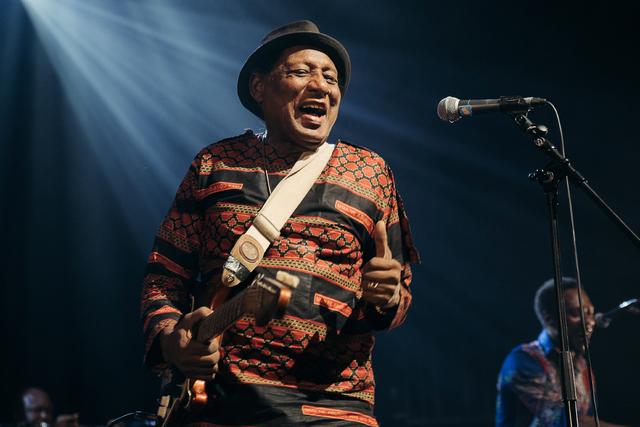
Ebo Taylor
Ebo Taylor (born 1936) is a Ghanaian guitarist, composer, bandleader, producer and arranger focusing on highlife and afrobeat music. Ebo Taylor has been a pivotal figure on the Ghanaian music scene for over six decades. In the late '50s he was active in the influential highlife bands the Stargazers and the Broadway Dance Band. In 1962, Taylor took his group, the Black Star Highlife Band, to London. In London, Taylor collaborated with Nigerian afrobeat star Fela Kuti as well as other African musicians in Britain at the time. Returning to Ghana, Taylor worked as a producer, crafting recordings for Pat Thomas, C.K. Mann, and others, as well as exploring solo projects, combining traditional Ghanaian material with afrobeat, jazz, and funk rhythms to create his own recognizable sound in the '70s. Taylor's work became popular internationally with hip-hop producers in the 21st century. In 2008, Ebo Taylor met the Berlin-based musicians of the Afrobeat Academy band, including saxophonist Ben Abarbanel-Wolff, which led to the release of the album Love and Death with Strut Records (his first internationally distributed album). In 2009, Usher used a sample from Taylor's song "Heaven" for "She Don’t Know." The success of Love and Death prompted Strut to issue the retrospective Life Stories: Highlife & Afrobeat Classics 1973-1980, in the spring of 2011. A year later, in 2012, a third Strut album, Appia Kwa Bridge, was released. Appia Kwa Bridge showed that at 77 years old, Taylor remained creative, mixing traditional Fante songs and chants with children's rhymes and personal stories into his own sharp vision of highlife. He performed at the 2015 edition of the annual Stanbic Jazz Festival along with Earl Klugh,Ackah Blay and others.
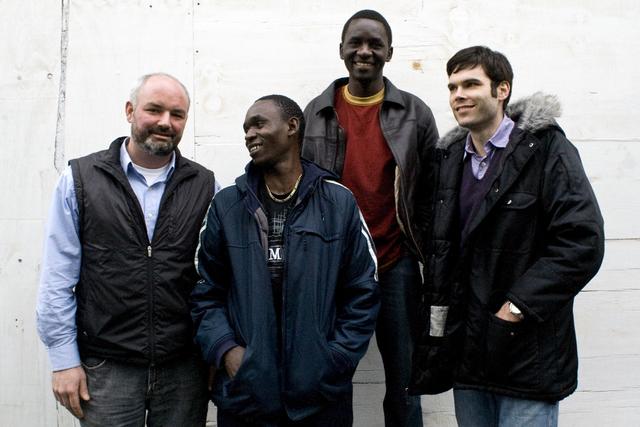
Extra Golden
Extra Golden is a musical ensemble founded by two Americans and one Kenyan. Bandmember Ian Eagleson studied Benga music from Nairobi for his Ph.D. thesis, and received assistance from Otieno Jagwasi, a Kenyan musician who played in a group called Orchestra Extra Solar Africa. Eagleson traveled with Jagwasi to Africa to continue his studies in 2004, bringing studio equipments along. His friend Alex Minoff, of Weird War, visited him in April 2004, and the three of them recorded an album together during their stay, which was released on Thrill Jockey Records. Jagwasi died of liver failure in 2005, but the remaining two members collaborated further with Jagwasi's brother, Onyago Wuod Omari (a drummer in Orchestra Extra Solar Africa) and Opiyo Bilongo, an established Benga musician. Two more albums with this configuration arrived in 2007 and 2009.

Fatoumata Diawara
Fatoumata Diawara (born 1982 in Ivory Coast) is a Malian actor, singer-songwriter and multiple Grammy Award nominee currently living in France. She received two nominations at the 61st Annual Grammy Awards for Best World Music Album for her album Fenfo and Best Dance Recording for Ultimatum featuring the English band Disclosure. Biography Born in the Ivory Coast to Malian parents, Diawara moved to France to pursue acting, appearing in Cheick Oumar Sissoko's 1999 feature film Genesis, Dani Kouyaté's popular 2001 film Sia, le rêve du python, in the internationally renowned street theatre troupe Royal de Luxe, and played a leading role in the musical Kirikou et Karaba. She later took up the guitar and began composing her own material, writing songs that blend Wassoulou traditions of southern Mali with international influences. Noted for her "sensuous voice," she has performed or recorded with Malian and international greats such as Cheick Tidiane Seck, Oumou Sangaré, AfroCubism, Dee Dee Bridgewater (on Red Earth: A Malian Journey), and the Orchestre Poly Rythmo de Cotonou. The EP Kanou was released May 9, 2011, and her debut album Fatou from World Circuit Records was released in September 2011. (Nonesuch Records released the Kanou EP digitally in North America on September 27, 2011, and the album Fatou on August 28, 2012.) In September 2012, she featured in a campaign called "30 Songs / 30 Days" to support Half the Sky, a multi-platform media project inspired by Nicholas Kristof and Sheryl WuDunn’s book. September 2012 also saw her board the Africa Express Train with Damon Albarn, Rokia Traoré, Baaba Maal, Amadou & Mariam, Nicolas Jaar, and the Noisettes, amongst many others. The show culminated in a 4.5k venue in Kings Cross where Fatoumata performed with Paul McCartney. Fatoumata has spent the recent years touring the world, with a landmark performance for the English-speaking public at Glastonbury 2013. Alongside many European gigs her schedule has taken her to South America, Asia and Australia as well as on multiple trips to the US, where in September 2013 she performed as part of the Clinton Global Initiative alongside The Roots in New York. Since mid-2014 she has been in collaboration with Roberto Fonseca, with numerous live performances and a joint live album, At Home - Live in Marciac, along the way. In 2014 she also extended her list of collaborations by a joint performance with Mayra Andrade and Omara Portuondo. February 2015 saw her first live concert as a meanwhile established international name back home at the Festival Sur Le Niger in Ségou, Mali, where she shared the stage once again with her long-time friend and mentor, Oumou Sangaré; Bassekou Kouyate; and many other domestic acts. Alongside, she has continued her cinematic activities, with numerous roles, appearances and musical input in multiple feature films, such as the seven times César Award winning and Academy Award nominated 2014 Timbuktu.
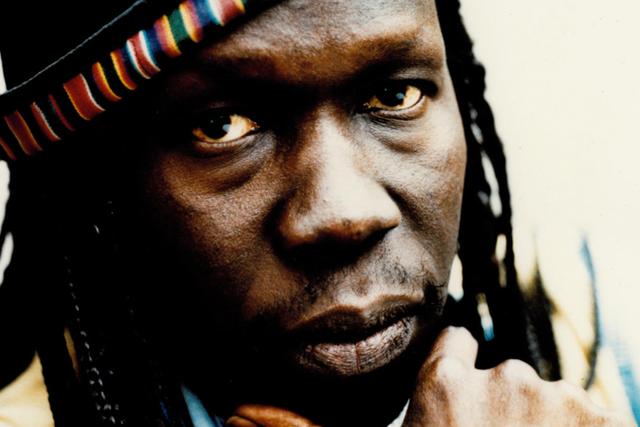
Geoffrey Oryema
Geoffrey Oryema (16 April 1953 – 22 June 2018) was a Ugandan musician. In 1977 after the murder of his father, Erinayo Wilson Oryema, who was a cabinet minister in the government of Idi Amin, he began his life in exile. At the age of 24, and at the height of Amin's power, Oryema was smuggled out of the country in the trunk of a car. He sang in the languages of his youth, Swahili and Acholi, the languages of his lost country, the "clear green land" of Uganda, and he also sang in English and French. Oryema earned his international reputation on the release of his second album, Beat the Border. He had collaborated with Peter Gabriel and others, and was backed by French musicians including Jean-Pierre Alarcen (guitar) and Patrick Buchmann (drums, percussion, backing vocals), touring with WOMAD in Australia, the USA, Japan, Brazil and Europe. In 1994 the band performed at Woodstock 94 celebrating the 25th anniversary of the legendary festival. Gabriel's record label, Real World, helped with the first three of Oryema's albums, before his move to Sony International, a label established in France, where Oryema had lived since his exile. In July 2005, he performed at the LIVE 8: Africa Calling concert in Cornwall, and with 1 Giant Leap at the Live 8 Edinburgh concert. He resided in Paris, France until his passing. His ashes were delivered to Anaka.

Gipsy Kings
The Gipsy Kings are a group of flamenco, salsa and pop musicians from Arles and Montpellier in the south of France, who perform in Andalusian Spanish. Although group members were born in France, their parents were mostly gitanos, Spanish gypsies who fled Catalonia during the 1930s Spanish Civil War. They are known for bringing Catalan rumba, a pop-oriented music distantly derived from traditional flamenco music, to worldwide audiences. The group originally called itself Los Reyes. Their music has a particular rumba flamenca style, with pop influences; many songs of the Gipsy Kings fit social dances, such as salsa and rumba. Their music has been described as a place where "Spanish flamenco and gypsy rhapsody meet salsa funk".
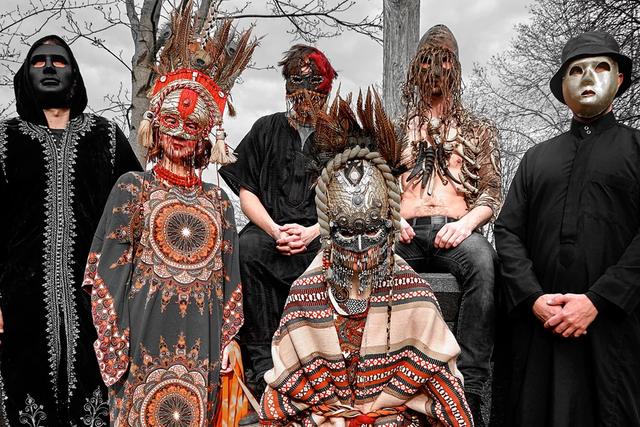
Goat
Goat is a Swedish alternative and experimental fusion music group. The band originates—according to its own publicity—from Korpilombolo, Norrbotten County. Their first album World Music, was released on 20 August 2012 by Rocket Recordings, and in North America on the Sub Pop label. The group released their third studio album, Requiem, in October 2016.

Habib Koité
Habib Koité (Bambara: Habib Kuwate, born 1958 in Thiès, Senegal) is a Malian musician, singer, songwriter based in Mali. His band, Bamada, is a supergroup of West African musicians, which included Kélétigui Diabaté on balafon until his death in 2012. Koité is known primarily for his unique approach to playing the guitar by tuning it on a pentatonic scale and playing on open strings as one would on a kamale n'goni. Other pieces of his music sound more like the blues or flamenco which are two styles he learned under Khalilou Traore. Koité's vocal style is intimate and relaxed, emphasizing calm, moody singing rather than operatic technical prowess. Members of Bamada play talking drum, guitar, bass, drum set, harmonica, violin, calabash, and balafon. Koité composes and arranges all songs, singing in English, French, and Bambara.

Hailu Mergia
Hailu Mergia & His Classical Instrument (Amharic:ኃይሉ መርጊያና የመሣረያ ቅንብሮቹ), also known as Shemonmuanaye, is a 1985 studio album by Ethiopian jazz musician Hailu Mergia, formerly of the Walias Band. After the band split up in 1983, Mergia moved to the United States and began studying music at Howard University, during which time he discovered an accordion and began playing it. Initially intending to record a cassette of himself playing the accordion in a small studio belonging to an acquaintance at Howard, he also incorporated other instruments in the studio, such as a Rhodes piano and synthesiser. Using all three instruments and a drum machine, he recorded His Classical Instrument to showcase his mastery of the accordion, an instrument which reminded him of his youth – and which had lost popularity in Ethiopia since the 1950s – with the hopes of bringing it back to prominence. Via the inclusion of modern instruments, the album was also intended to mix the old accordion style with the modern technology of the United States. Originally released in Ethiopia on cassette by Kaifa Records, the album was a surprise hit when listeners warmed to its unusual sound, though, as was often the case with Mergia's music, the album was unheard outside of the country, and he soon slipped into obscurity. When Brian Shimkovitz, founder of American reissue label Awesome Tapes From Africa, discovered a copy of the album in Ethiopia in 2013, he hoped to re-release it on his label, and contacted Mergia, who greenlit the project. Upon its re-release in various formats by the label that same year, the album received critical acclaim, with Western critics complimenting its uniquely psychedelic and dreamy sound. The success of the album relaunched Mergia's international touring career, which had ceased several decades earlier, and brought him international recognition. The label would later re-release further cassettes of Mergia's music.

Har-You Percussion Group
The 101 Strangest Records on Spotify: Har-You Percussion Group - Har-You Percussion Group Forming after the Harlem Riots of 1964, Har-You make Afro-Cuban sounds with furious and hip-shakingly groovesome rhythms If you've ever wondered whether the world has changed a bit since the late summer of 1969, or whether it's basically the same, your answer will lie in this record and one of its contemporary reviews. "Here is a young, unknown group of musicians from Harlem," US music industry bible Billboard wrote in the last August of the 1960's. "[They've] pooled their talents to prove to the world that ghettos can produce more than shiftless undesirables." Wow, well there's a phrase to conjure with. Of course, it's hard to tell whether the unnamed writer was going for humour, but - either way - there's nothing funny about this LP. Funky, yes. Furious, yes. Hip-shakingly groovesome, yes. Awesomely enthusiastic, yes. Funny? Not so much. Produced by legendary Jamaican jazz percussionist and drummer Roger "Montego Joe" Sanders and released by ESP Disk, this is a fantastically dynamic blend of Afro-Cuban rhythms with richly melodic jazz overtones, capturing the sound of people on the cusp of becoming great players. The horn-section in Tico is together and on the beat, but not quite confident enough to stretch out, while the gloriously full-steam-ahead attack of Santa Cruz threatens to derail itself but never does. Har-You began life as Harlem Youth Unlimited, a community group put together by Sanders after the Harlem Riots of 1964. On the audio track that accompanies this edition of the LP he described the group as "emotionally unstable young men with no inspiration and no place to go" and the record was meant to show those who held the city's purse strings that many people who had been written off and ignored would be much better listened to and appreciated. You have to hope that, after a showing like this, they were. Of course, despite the goodwill, the stinging Latin percussion and the powerful R&B horn riffs, no one really bought it, but the track Welcome To The Party - thanks to its ebullient brilliance and insane rarity - grew into a huge rare-groove club hit, one big enough to ensure this wonderful album was never forgotten. An original will cost you £500, by the way. So up yours, anonymous critic.
Hossam Ramzy
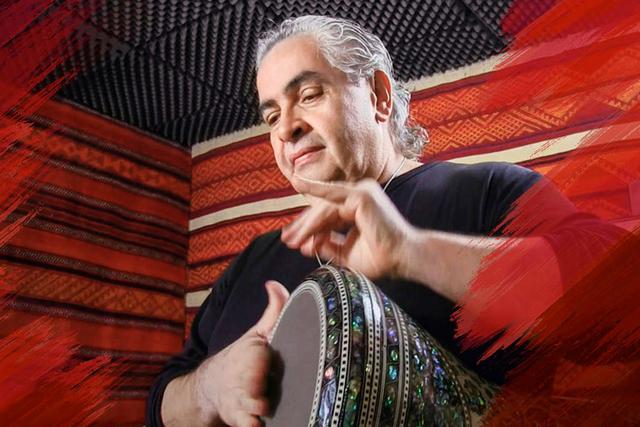
Hossam Ramzy (Arabic: حسام رمزي; born in Cairo, Egypt) is an Egyptian percussionist and composer. He has worked with Western artists like Jimmy Page and Robert Plant as well as with Arabic music artists like Rachid Taha and Khaled. Ramzy was born into a wealthy Cairo family. He began playing the darbuka and tabla at an early age. He moved to Saudi Arabia for a time and learned traditional Bedouin music styles. In the 1970s he moved to London and began playing with saxophonist Andy Sheppard. His collaborations with jazz musicians earned him the nickname "The Sultan of Swing". In 1989 he worked with Peter Gabriel on the soundtrack to Martin Scorsese's The Last Temptation of Christ. This brought him to the attention of artists such as Frank Asher and the Gipsy Kings. In 1994 he returned to his roots and formed a ten piece Egyptian ensemble that performed on the album No Quarter: Jimmy Page and Robert Plant Unledded. Ramzy and his ensemble also gained exposure by touring with Plant and Page throughout 1995 in support of their album. The next year Ramzy released the first of three collaborations with English arranger Phil Thornton, Eternal Egypt. The success of Eternal Egypt's blend of Arabic music prompted the follow up albums Immortal Egypt and Enchanted Egypt. In 1996, Hossam and his percussion section played with Big Country in Dingwalls club. From this event was recorded "Eclectic". In 1998, he performed with Rachid Taha, Khaled and Faudel at their 1,2,3 Soleils concert and backed Khaled again for the Claude Challe album Flying Carpet. In 2000, Jay-Z sampled his version of "Khosara" for "Big Pimpin'". After 2000 Ramzy increasingly began to work arranging music for pop stars. In 2005 he arranged some songs for Ricky Martin's album Life and he worked with Shakira on her album She Wolf. He also contributed two songs to the soundtrack for the film Prince of Persia and one to the soundtrack for Conan The Barbarian. His latest album titled Rock the Tabla released on 30 August 2011. It features Indian composer A.R. Rahman, Omar Faruk Tekbilek, Manu Katché and Billy Cobham.
Jungle Fire
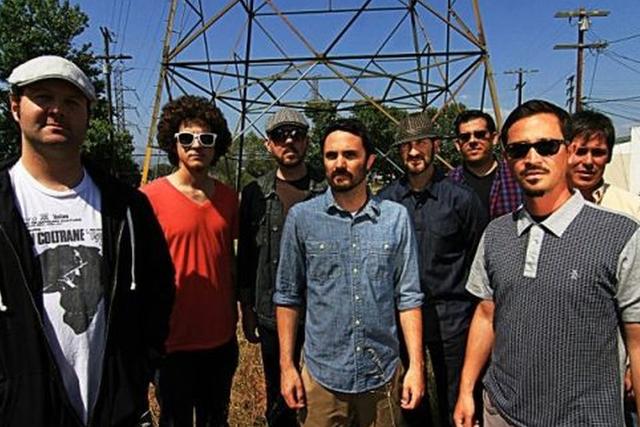
Jungle Fire’s highly infectious and explosive sound draws inspiration from the groundbreaking rhythm sections behind James Brown, Fela Kuti, Ray Barretto and Irakere; a musical recipe consisting of West African and Afro-Caribbean styles layered with heavy break-beat funk, all spiced with a dose of uniquely Angeleno grit. Originally conceived as a one-off project back in 2011, JF quickly gained attention and thus proved its place among the thriving LA funk/soul scene by lighting up local clubs, venues and underground warehouse parties. The buzz grew and word of mouth spread eventually linking up the band with the Ohio-based indie soul label Colemine Records to cut their first 7” single “Comencemos” (a cover of Fela’s “Let’s Start”). Lauded by DJ’s, radio stations, tastemakers and rabid funk fans across the globe “Comencemos” sold out internationally paving the way for the second 7” Colemine release “Firewalker”. “Few bands live up to their name in the way Jungle Fire do; fusing Cumbia, Afrobeat and traditional funk, each JF jam blazes the floor with real power” as described by Juno Records UK, best sums up the Jungle Fire live show. Serving up a healthy dose of originals and deep latin/afro funk covers all cooked up together in a live mixtape style set ensuring an energy that is nothing short of fire. Since their inception Jungle Fire has played an impressive amount of club dates and festivals both domestic and abroad having shared the stage with Shuggi Otis, The Blackbyrds, Lee Fields, Charles Wright, The Budos Band and even performing for Los Angeles’ recent mayoral inauguration. Currently, JF has been supporting their first full-length record “Tropicoso” via the Los Angeles heavyweight Latin Alternative label Nacional. Focused on taking their show international Jungle Fire embarked on a massively successful U.K. tour playing to packed venues at every stop including headlining Craig Charles’ Funk Club (Band On The Wall) and BBC 6 Radio. Not stopping there, the band also made their South American debut at the Mompox Jazz Festival in Colombia.

Kaouding Cissoko
The kora is the most popular instrument of the griots - the musical caste of west Africa's Wolof and Fula peoples. A cross between a harp and a lute, with 21 to 25 strings, its striking appearance - a gourd-shaped base, which players rest in their groin, and a long, thin, bridged neck - and its beautiful ringing sound have made it west Africa's most revered instrument. Kaouding Cissokho, who has died of tuberculosis aged 38, was internationally acclaimed as one of its masters. Kaouding was born in Tamba Counda, eastern Senegal, the son of the famous oral historian and kora player Banna Cissokho. Being born into a griot family would normally have meant he was studying kora at the feet of his father. Yet his parents sent him to a vocational school to be a carpenter. But Kaouding's desire to play the instrument led him, with his brother's kora, to take lessons from his uncle Cheick Diabate, a fine guitarist. As a result he turned into a more experimental musician than the tradition-bound players in his family - and, when touring the world, he added double bass pickups to make his kora's ringing tone heard above the electric guitars and keyboards. Kaouding began by accompanying griot praise singers - reciting the histories and accomplishments of their employers - with his fluid finger work creating exquisite melodies. He came into his own when he teamed up with Baaba Maal, who is ranked second in terms of international following only to Youssou N'Dour among Senegalese singers. Soon Kaouding was playing in Europe, the United States and Asia. His energy and joy fitted well into Maal's show, while his desire to experiment - he is remembered as a funky, boundary-crossing player by aficionados - found him playing on recordings with Senegalese rappers Positive Black Soul, the late Pakistani qawwali singer Nusrat Fateh Ali Khan and on Jamaican jazz guitarist Ernest Ranglin's acclaimed In Search Of The Lost Riddim (1998). On this last, his light melodic touch provided the perfect accompaniment to Ranglin's dazzling lead guitar. Kaouding was a co-founder of Afro-Celt Sound System, formed in 1996 at a Real World recording week. This musical collaboration, at Peter Gabriel's Real World label's Wiltshire studios, follows each summer's Womad festival. Mixing west African and Celtic instrumentation over electronic dance rhythms suggested a mess in the making, but the result was Real World's bestselling album. The Afro-Celts became a summer festival fixture and, while Kaouding's commitment to Maal kept him from becoming an Afro-Celt fulltimer, he contributed much to their development. In November 1998, Kaouding joined Maal in New York for the Red, Hot And Rhapsody George Gershwin tribute concerts and recording. The kora lines on Bess, You Is My Woman sparkle and shimmer. Maal's 2001 album Missing You (Mi Yeewnii) was hailed as a triumph, and a good deal of that glory must be shared with Kaouding and his exquisite kora rhythms and melodies. His solo album Kora Revolution was released in 1999. Kaouding had been ill for a few weeks and, thinking he had been cursed, visited various witchdoctors. At Maal's urging, he finally sought hospital treatment - expensive in Senegal - where he was diagnosed. Kaouding was, as his tour manager observed, "one of the kindest and most generous people that you could meet". He is survived by his second wife and three children. · Kaouding Cissokho, musician, born November 2 1964; died July 18 2003.
Kokoroko
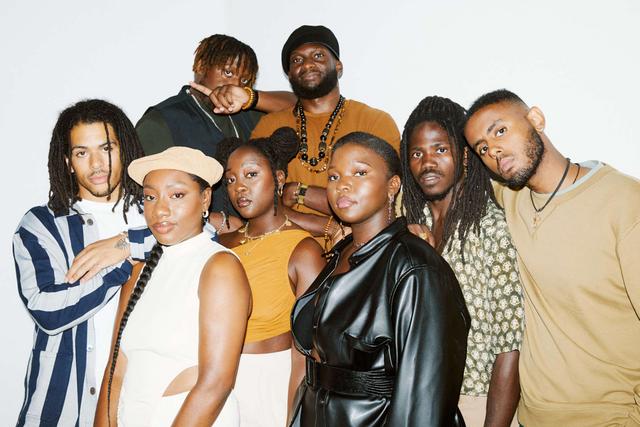
Kokoroko (stylised as KOKOROKO) is a London-based eight-piece musical group led by Sheila Maurice-Grey, playing a fusion of Jazz and Afrobeat. In February 2019 they were named "ones to watch" by the Guardian, after their track "Abusey Junction" garnered 23 million views on YouTube. In February 2020 they won Best Group at the Urban Music Awards. In September 2020 they played BBC Proms at the Royal Albert Hall.

Manu Chao
Manu Chao (Spanish pronunciation: [ˈmanu ˈtʃao]; born José-Manuel Thomas Arthur Chao, June 21, 1961) is a French musician of Spanish descent. He sings in French, Spanish, English, Italian, Arabic, Catalan, Galician, Portuguese, Greek and occasionally in other languages. Chao began his musical career in Paris, busking and playing with groups such as Hot Pants and Los Carayos, which combined a variety of languages and musical styles. With friends and his brother Antoine Chao, he founded the band Mano Negra in 1987, achieving considerable success, particularly in Europe. He became a solo artist after its breakup in 1995, and since then tours regularly with his live band, Radio Bemba.
Mdou Moctar
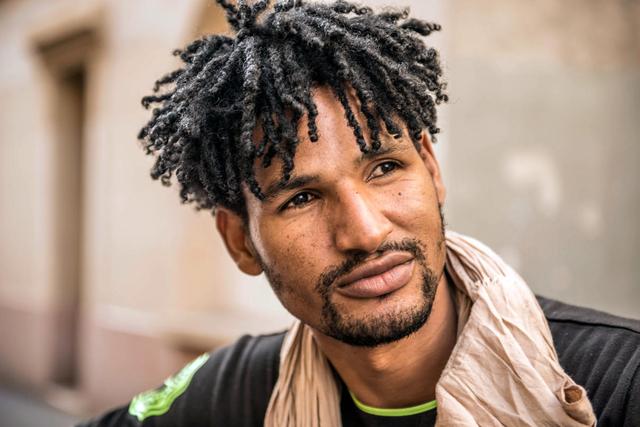
Mdou Moctar (also known as M.dou Mouktar; born c. 1986) is a Tuareg songwriter and musician based in Agadez, Niger, and is one of the first musicians to perform modern electronic adaptations of Tuareg guitar music. He first became famous through a subtle trading network of cellphones and memory cards in West Africa. Mdou Moctar is a popular wedding performer and sings about Islam, education, love and peace in Tamasheq. He plays a left-handed Fender in a takamba and assouf style. He is originally from Abalak and has also lived in Tchintabaraden and Libya. His first album, Anar, was recorded in Sokoto, Nigeria in 2008 and prominently featured "spaced-out" autotuned vocals and the influence of Hausa music. The album was not officially released at the time but the songs became hugely popular across the Sahel when they went viral through cell-phone music trading networks. They reached a global audience when Sahel Sounds released his music on the Music from Saharan Cellphones: Volume 1 compilation. Two songs were covered with English homophone lyrics by Brainstorm, an American band from Portland, Oregon. Anar was released on vinyl in 2014 with a high price, due to "predatory business practices" from Sixt on Moctar's first European tour. His next album, Afelan, was recorded live in Tchintabaraden and features "rusty-edged jams and sun-weathered ballads". The title track is named after a celebrated historical/folkloric hero of the Azawough of Western Niger. It contains a cover of "Chet Boghassa" by Tinariwen. On his first realizations and interest of an audience outside of the Saharan region, Moctar said in late 2014: "“I first met (Christopher Kirkley of Sahel Sounds) on the mobile phone as he had called me ... It was a weird conversation, as I thought my cousin was pulling a joke on me so I hung up. This American guy calling me, saying he wanted to work with me for my music, it just couldn’t be real. He called me again and we talked. He came to visit me in my village and also sent me a lefthanded guitar, which is very hard to find in Niger. This guitar has crossed several African countries to arrive in my hands, I have been playing it ever since!

Menahan Street Band
Menahan Street Band is a Brooklyn, New York-based instrumental band formed in 2007, that plays funk and soul music. The band features musicians from Antibalas, El Michels Affair, Sharon Jones & The Dap-Kings and the Budos Band. The group was founded by Thomas Brenneck while living in an apartment on Menahan St. in the Brooklyn neighborhood of Bushwick. Their debut album, Make the Road by Walking, was released in 2008 on Dunham, a sublabel of Daptone Records. Various songs from Make the Road by Walking have been sampled by hip hop artists, including the title track, which was sampled by Jay-Z on the track "Roc Boys (And the Winner Is)...", "Going The Distance", which was sampled by Kid Cudi on his song "Solo Dolo Pt.II" featuring Kendrick Lamar on Cudi's third studio album Indicud, and "The Traitor," sampled by 50 Cent on his mixtape War Angel LP and by Cudi on his debut album Man on the Moon: The End of Day. In addition, the song "Tired of Fighting" is used as a primary sample in Kendrick Lamar's "Faith" from his eponymous 2009 EP, as well as YBN Cordae's 2019 track "Family Matters" from his debut album The Lost Boy.
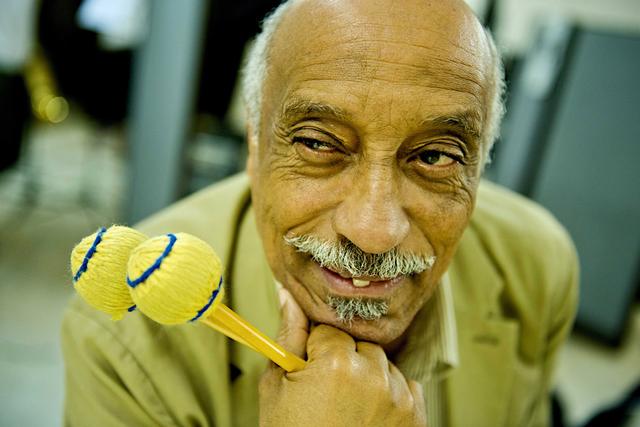
Mulatu Astatke
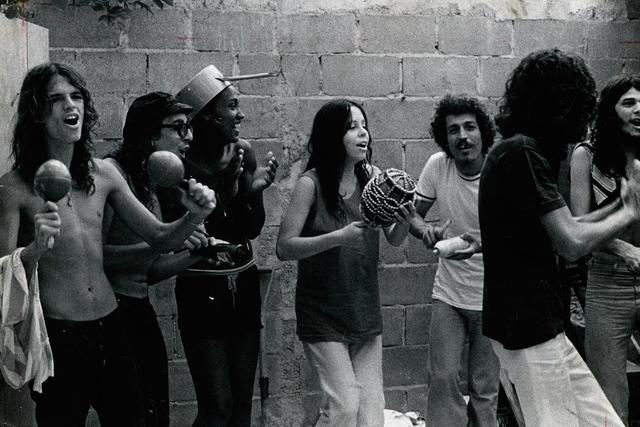
Novos Baianos
Novos Baianos was a Brazilian rock and MPB group from Salvador, Bahia. It was formed in the 1960s and enjoyed success throughout most of the 1970s. The band members were Paulinho Boca de Cantor (vocals), Pepeu Gomes (electric guitar), Moraes Moreira (vocals and acoustic guitar), Baby Consuelo (vocals and percussion) and Luiz Galvão (lyrics). The group always counted on the collaboration of the band A Cor do Som, composed of Pepeu Gomes (guitar), Dadi (bass), Jorginho (cavaquinho, drums and percussion), Baixinho (drums and percussion) and Bolacha (percussion). Novos Baianos is considered one of the most important and revolutionary groups in Brazilian music. History Novos Baianos started in the 1960s, but they appeared in public for the first time in 1968 at the show "Desembarque dos bichos depois do dilúvio", presented in Salvador, Bahia, Brazil. At the time, the group was composed of Moreira, Boca de Cantor, Consuelo and Galvão. In 1969, the group participated in V Festival de Música Popular Brasileira, playing the song 'De vera'. The origin of the name came up during a performance on the TV channel Rede Record. When the group was still nameless, the festival producer, Marcos Antônio Riso yelled (in Portuguese) "Bring up these new Bahians!", referring to the band's place of origin ("Novos Baianos" is Portuguese for "new Bahians"). This song was on the band's first album, É ferro na boneca, recorded one year later. Initially their sound was a fusion of psychedelic rock with traditional folk sounds from Brazil. Originally, the group only played with Pepeu Gomes and Jorginho at their live shows. However, gradually, Gomes started to acquire an ever more important role in the group: after he married Consuelo, he became a fully fledged band member and song arranger along with Moreira. Their music began to gravitate more towards MPB, particularly due to João Gilberto's influence, who frequently visited the group. Their second album Acabou Chorare contained the classics 'Brasil Pandeiro', 'Preta Pretinha', 'Mistério do Planeta' and 'Besta é tu'. It was recorded on the Som Livre label in 1972, and years later would be considered the best Brazilian music album by Rolling Stone magazine. It was around this period that the group incorporated A Cor do Som as an auxiliary band. In 1972, after recording Acabou Chorare, Novos Baianos moved to a community in Vargem Grande, Rio de Janeiro, in a garage where they lived, played and composed music, and played soccer. This was the reason for the name of their third album, Novos Baianos F.C., recorded on the label Continental in 1973. The group had a strong hippie image at this time. The band released records until their break-up in 1978. In 1974, they recorded the first album without Moreira, who decided to start his own solo career. As Moreira had previously composed songs with Galvão and arranged songs with Gomes for the band's previous albums, it was a great loss to the band. The members tried to continue and incorporated Gato Félix to the group. In 1976, Dadi left the group to start A Cor do Som. Novos Baianos substituted Didi, the brother of Pepeu Gomes, for the loss of Dadi. However, the group disbanded some years later due to members starting their solo careers. Despite the end of the band, Novos Baianos' members reunited many times to celebrate special events. In 1997, the composer of the group, Luiz Galvão, published the book Anos 70: Novos e Baianos for Editora 34. In the book he tells the history of the group and its importance to Brazilian music. After Galvão released the book, the group reunited to record a new album, named Infinito Circular, recorded live at Metropolitan, Rio de Janeiro. In 2007, Moreira also published a book about the group. It was written as a cordel text and was named A História dos Novos Baianos e Outros Versos. In 2009, the band reunited without Moreira to celebrate 40 years of Novos Baianos and their revolutionary role in Brazilian music.

Oliver Mtukudzi
Oliver "Tuku" Mtukudzi (22 September 1952 – 23 January 2019) was a Zimbabwean musician, businessman, philanthropist, human rights activist and UNICEF Goodwill Ambassador for Southern Africa Region. Tuku was considered to have been Zimbabwe's most renowned and internationally recognised cultural icon of all time. Mtukudzi grew up in Highfield, a poor neighborhood in Salisbury (modern-day Harare) in Southern Rhodesia, as the eldest of seven siblings. While both his parents sang in a choir, they were initially not supportive of his continued interest in music, consequently breaking his first homemade guitar. He began performing in 1977 when he joined the Wagon Wheels, a band that also featured Thomas Mapfumo and fellow legendary guitarist James Chimombe. They were given the rare opportunity by Paul Tangi Mhova Mkondo, an African nationalist and music promoter, who provided money and resources to the group. With the support of Mutanga, the prayers and blessings of Amai Mutanga, he allowed them to perform at Mutanga Restaurant & Night Club (Pungwe) which, at the time, was the first and only African licensed (obtained by Mkondo) night club available for blacks under Rhodesia's policy of segregation. Their single Dzandimomotera went gold and Tuku's first album followed, which was also a major success. Mtukudzi is also a contributor to Mahube, Southern Africa's "supergroup". With his husky voice, Mtukudzi has become the most recognised voice to emerge from Zimbabwe and onto the international scene and he has earned a devoted following across Africa and beyond. A member of Zimbabwe's KoreKore group, with Nzou Samanyanga as his totem, he sings in the nation's dominant Shona language along with Ndebele and English. He also incorporates elements of different musical traditions, giving his music a distinctive style, known to fans as Tuku Music. Mtukudzi has had a number of tours around the world. He has been on several tours in the UK, US and Canada to perform for large audiences. In 2017 Mtukudzi entertained guests at the wedding of Zimbabwean businessman Wicknell Chivayo. Mtukudzi is the father of five children and has two grandchildren. Two of his children are also musicians. His son Sam Mtukudzi, a successful musician in his own right, died in a car accident in March 2010 and in 2013, he released an album titled "Sarawoga", in tribute to his son.
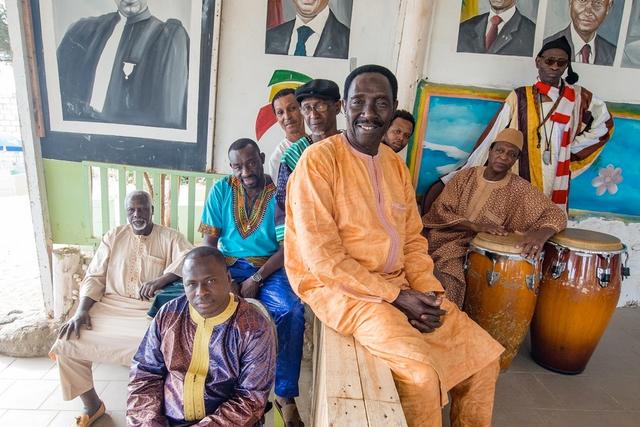
Orchestra Baobab
Orchestra Baobab is a Senegalese band established in 1970 as the house band of the Baobab Club in Dakar. Many of the band's original members had previously played with Star Band de Dakar in the 1960s. Directed by timbalero and vocalist Balla Sidibe, the group features saxophonists Issa Cissoko and Thierno Koité, two singers, two guitarists and a rhythm section with drums, congas and bass guitar. Since their formation, the band has predominantly played a mix of son cubano, Wolof music, and to a lesser extent Mande musical traditions. Orchestra Baobab became one of the dominant African bands of the 1970s, recording 20 albums before their breakup in 1987, which occurred as a result of the increase in popularity of mbalax, a more contemporary genre of Senegalese music. In the years following their disbandment, World Circuit released several of their albums on CD, making the band very popular among world music fans in the UK and the rest of Europe. This prompted their reformation in 2001, which was followed by the recording of a new album, Specialist in All Styles. The group continues to tour extensively and has released two more studio albums, Made in Dakar (2007) and Tribute to Ndiouga Dieng (2017). Many of the original members were veterans of the famous Star Band, whose alumni later included the Étoile de Dakar, El Hadji Faye and Youssou N’Dour. Star Band were the resident band of the upscale Dakar Miami Club. When the Baobab Club opened in Dakar in 1970, six musicians, led by saxophonist Baro N'Diaye, were lured from Star Band and the Orchestra Baobab was born. The club, in turn, is named for the baobab tree (Adansonia). The original frontmen of the band were the Casamance singers Balla Sidibe and Rudy Gomis, who came from the melting pot of Casamance musical styles, and most famously Laye M'Boup, who provided vocals in the Wolof griot style. His Wolof language lyrics and his soaring, nasal voice defined the sound of Baobab's early hits. Togolese guitarist and arranger Barthélémy Attisso was a law student in Dakar, and a self-taught musician, whose arpeggiated runs became instantly recognizable. With the saxophone of N'Diaye, this was the first core of the band. After touring Cameroon in 1971, N'Diaye was replaced by tenor saxophonist Issa Cissoko, who became leader of the band, and was joined by clarinettist Peter Udo. Both Cissoko and drummer Mountaga Koité were from Maninka griot families, from Mali and eastern Senegal, respectively. The group's lineup was rounded out by the slow groove Latin styles of Latfi Benjeloum (rhythm guitar), who came from a Moroccan family exiled to Saint-Louis, Senegal, and Charlie N'Diaye (bass) from Casamance. The group's first recodings were released as Orchestre Saf Mounadem on a split album with Orchestre Laye Thiam, another band of ex-Star Band musicians. Attisso is credited as musical director, and singers Balla Sidibe and Medoune Diallo (who had stayed with the Star Band a bit longer than the others), along with Issa Cissoko are also credited on the cover. Like most of the recordings by Star Band, the album was produced by Ibrahim Kassé, and was later reissued in France under the title Star Band de Dakar Vol. 7. Their first two albums under the name Orchestra Baobab, were recorded at the Baobab Club between 1970 and 1972, and self-produced by the band. Both bear the title Orchestre du Baobab.
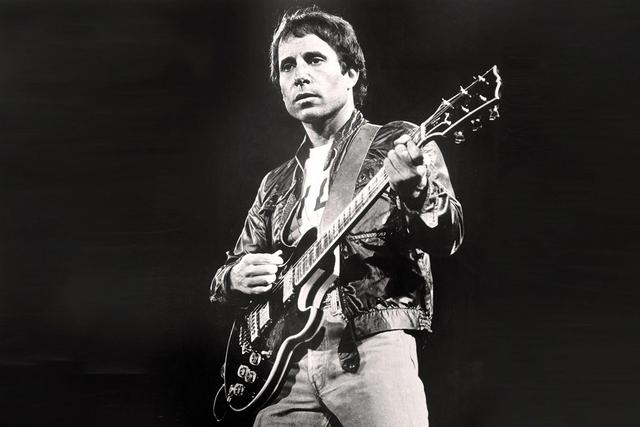
Paul Simon
Paul Frederic Simon (born October 13, 1941) is an American singer-songwriter and actor. Simon's musical career has spanned seven decades with his fame and commercial success beginning as half of the duo Simon & Garfunkel (originally known as Tom & Jerry), formed in 1956 with Art Garfunkel. Simon was responsible for writing nearly all of the pair's songs including three that reached number one on the U.S. singles charts: "The Sound of Silence", "Mrs. Robinson", and "Bridge over Troubled Water". The duo split up in 1970 at the height of their popularity, and Simon began a successful solo career, recording three acclaimed albums over the next five years. In 1986, he released Graceland, an album inspired by South African township music, which sold 14 million copies worldwide on its release and remains his most popular solo work. Simon also wrote and starred in the film One-Trick Pony (1980) and co-wrote the Broadway musical The Capeman (1998) with the poet Derek Walcott. On June 3, 2016, Simon released his 13th solo album, Stranger to Stranger, which debuted at No. 1 on the Billboard Album Chart and the UK charts. Simon has earned sixteen Grammys for his solo and collaborative work, including three for Album of the Year (Bridge Over Troubled Water, Still Crazy After All These Years, and Graceland), and a Lifetime Achievement Award. In 2001, he was inducted into the Rock and Roll Hall of Fame and in 2006 was selected as one of the "100 People Who Shaped the World" by Time. In 2011, Rolling Stone named Simon one of the 100 greatest guitarists. In 2015, he was named one of the 100 Greatest Songwriters of All Time by Rolling Stone. Among many other honors, Simon was the first recipient of the Library of Congress's Gershwin Prize for Popular Song in 2007. In 1986, he was awarded an Honorary Doctor of Music degree from Berklee College of Music, where he currently serves on the Board of Trustees.

Piers Faccini
Piers Faccini was born in London, England to an Italian father and an English mother. His family moved to France when he was five years old. His brother is the writer Ben Faccini. Faccini first appeared on the music scene in London in 1997, co-founding Charley Marlowe with performance poet Francesca Beard, percussionist Frank Byng and guitarist Luc Suarez; the band split in 2001 when Faccini decided to pursue a solo career. His first solo album Leave no Trace was released in 2004 by French Independent label Label Bleu. His second album was released by Los Angeles label Everloving Records in 2006; Tearing Sky was produced by JP Plunier, and featured Ben Harper, who Faccini would tour with between 2006 and 2008. His third album released by French Independent 'Tot ou Tard' in 2009 was co-produced by Faccini and Renaud Letang. His fourth album, My Wilderness, was released in late 2011 on Six Degrees Records. His fifth album, Between dogs and wolves 2013 and sixth album I Dreamed an Island 2016 were released on his own label Beating Drum. Faccini has collaborated over the years with many musicians and singers including Rokia Traore, Busi Mhlongo, Ben Harper, Ballake Sissoko, Vincent Segal, Camille, Francesca Beard, Luc Suarez, Seb Martel, Patrick Watson, Dawn Landes and Ibrahim Maalouf amongst others. In March 2011, Faccini contributed to the Patagonia Music Collective, contributing to the UK-based Environmental Justice Foundation. Faccini has also produced several albums for other artists, most notably Ela by Brazilian cellist and singer Dom La Nena, Northern Folk by Jenny Lysander and Terre de Mon Poeme by Yelli Yelli. Faccini is also a poet and children's author, publishing his first book of poetry ‘No one’s here’ in 2016 and a children's book/cd 'La Plus Belle des Berceuses' which he also illustrated in 2017, published by the French publisher, Actes Sud. in 2009 his album Two Grains Of Sand was nominated for the French independent music award, Le Prix Constantin and voted album of the year by the listeners of French national radio, France Inter. His album with the cellist Vincent Segal 'Songs of Time Lost' was in NPR’s top ten world music albums of 2014 and in Songlines top 10 albums of 2014 as well as in their Greatest World Music Albums of the last 5 years.

Remmy Ongala
Ramazani "Remmy" Mtoro Ongala (1947 10 Feb – 13 December 2010) was a Tanzanian guitarist and singer. Ongala was born in Kindu near the Tanzanian border, in what was the Belgian Congo at the time, and now is the Democratic Republic of the Congo. A rising musician since the 1980s, Remmy Ongala was part of the soukous scene (also known as "Congolese rumba"). In 1978 he travelled to Dar es Salaam where he joined Orchestra Makassy. Later with his own band, Orchestre Super Matimila (named after the businessman who owned the band's instruments), he helped to transmit the soukous style to the Tanzanian musical subculture often called Ubongo, the Swahili word for brain. This in turn contributed to the development of Tanzanian hip-hop, particularly in the city of Dar es Salaam during the 1990s. The use of his music as a social instrument led him to address concerns in his hometown that entailed social issues including poverty, AIDS/HIV, urbanization and family life. Known as the Sauti ya Mnyonge (voice of the poor man), his fight was strong. Ubongo is usually perceived by artists and listeners alike as "conscious" music, a style that actively contributes socio-political commentary to the Tanzanian soundscape. Believing in the abolition of racism and social injustice, Ongala infused his lyrics with these messages. His inspiring and sometimes didactic message led him to be nicknamed "Dr Remmy". Following the end of British colonial rule in 1961, Julius Nyerere preached the value of Ujamaa, or familyhood, as a basic constituent of Tanzanian nationalism, placing an emphasis on equality and justice. This became a recurring theme in many Tanzanian artists' music, including Remmy Ongala's. His song "Kipenda Roho" was used in Oliver Stone's film Natural Born Killers. Ongala died on 13 December 2010 at his home in Dar es Salaam. Posthumously, he received the Hall of Fame trophy at the 2012 Tanzania Music Awards. Veteran musician Ramadhan Mtoro Ongara better known as Dr. Remmy Ongala has passed on. The singer well known for his hit single ‘Kifo’ died on Monday morning at Muhimbili hospital. According to reports Remmy Ongala died as his family rushed him to hospital. Ongala's music is meant to be appreciated on a physical and mental level. As he looked around his homeland of the Congo, he noticed much poverty and social inequality. Outraged by the despicable way the poor are treated, he used song as a way of fighting back, and after long days of tedious and physically strenuous labor, Ongala would perform his music with ad hoc bands in nightclubs and hotels in the Congo, (then Zaire), and later, Uganda. Songs like "Ndumila Kuwili" ("Don't Speak with Two Mouths") and "Mnyonge Hana Haki" ("The Poor Have No Rights") reflected his working-class outlook. Despite a flourishing Congolese music scene, Remmy was unable to strike a universal chord with listeners across Africa, as his idols Franco and Joseph Kabasele had done so effortlessly. It wasn't until he ventured to Tanzania at the age of thirty-one that Ongala began to get a musical career on track. An uncle living in the Tanzanian capital of Dar-es-Salaam invited Ongala to come play music with him in the band Orchestra Makassy. When Makassy went to Kenya, Ongala stayed behind and joined Orchestre Matimila, which he later renamed Super Matimila. Ongala's group gets big band textures from the horn section and from elaborate arrangements for three guitars. The sound swept the local Tanzanian music scene, which, because of the closing of the border in 1977, had become isolated and quite unlike anything else in Africa. By 1981, Ongala and Orchestra Super Matimila, and were playing up to five nights a week in various nightclubs in Dar-es-Salaam. Because of the dearth of quality recording studios in the financially-strapped nation, most bands would simply record and release their live performances, and Orchestra Super Matimila was no exception. Soon, their songs were being played on Radio Tanzania and various Kenyan radio stations, and they helped to develop quite a following for the band. His inspiring message led him to be nicknamed "Dr Remmy". Following the end of British colonial rule in 1961, Julius Nyerere introduced the value of Ujamaa, or family hood, which emphasized equality and justice. Such became a recurring theme in many Tanzanian artists' music, including Remmy Ongala. Dr. Remmy will be remembered for publicly urging people to use condoms. Although he faced opposition, he went ahead and recorded a song ‘Mambo kwa soksi’. Ongala continued to record and perform in Tanzania--despite his international fame--and his songs are still as concerned with social injustice as ever. One song, urging men to use condoms--"Mambo Kwa Socks/Things with Socks"--appeared on the acclaimed AIDS awareness compilation Spirit of Africa, in 2001. When this song was first released, it proved too much for Radio Tanzania, which refused to play it. But live shows and black market tapes ensured that few urban Tanzanians missed the message. In a musical career approaching two decades, Remmy Ongala and Orchestra Super Matimila still made social issues sound funky. In 1989 he released his first studio album titled ‘Songs for the poor man’ which had songs like ‘Sauti Ya Mnyonge, Kifo ,Usingizi ,Muziki Asili Yake Wapi ,Pamella ,Dole

Ry Cooder
Ryland Peter "Ry" Cooder (born March 15, 1947) is an American musician, songwriter, film score composer, and record producer. He is a multi-instrumentalist but is best known for his slide guitar work, his interest in roots music from the United States, and his collaborations with traditional musicians from many countries Cooder's solo work draws upon many genres. He has played with John Lee Hooker, Captain Beefheart, Ali Farka Touré, Eric Clapton, The Rolling Stones, Van Morrison, Neil Young, Randy Newman, David Lindley, The Chieftains, The Doobie Brothers, and Carla Olson & the Textones (on record and film). He formed the band Little Village. He also produced the Buena Vista Social Club album (1997), which became a worldwide hit. Wim Wenders directed the documentary film of the same name (1999), which was nominated for an Academy Award in 2000. Cooder was ranked eighth on Rolling Stone magazine's 2003 list of "The 100 Greatest Guitarists of All Time" (David Fricke's Picks). A 2010 ranking by Gibson placed him at number 32.

Ryuichi Sakamoto
Ryuichi Sakamoto (坂本 龍一 Sakamoto Ryūichi, born January 17, 1952) (Japanese pronunciation: [sakamoto ɾʲɯːitɕi]) is a Japanese composer, singer, songwriter, record producer, activist, and actor who has pursued a diverse range of styles as a solo artist and as a member of Yellow Magic Orchestra (YMO). With his bandmates Haruomi Hosono and Yukihiro Takahashi, Sakamoto influenced and pioneered a number of electronic music genres. Sakamoto began his career while at university in the 1970s as a session musician, producer, and arranger. His first major success came in 1978 as co-founder of YMO. He concurrently pursued a solo career, releasing the experimental electronic fusion album Thousand Knives in 1978. Two years later, he released the album B-2 Unit. It included the track "Riot in Lagos", which was significant in the development of electro and hip hop music. He went on to produce more solo records, and collaborate with many international artists, David Sylvian, Carsten Nicolai, Youssou N'Dour, and Fennesz among them. Sakamoto composed music for the opening ceremony of the 1992 Barcelona Olympics, and his composition "Energy Flow" (1999) was the first instrumental number-one single in Japan's Oricon charts history. As a film-score composer, Sakamoto has won an Oscar, a BAFTA, a Grammy, and 2 Golden Globe Awards. Merry Christmas, Mr. Lawrence (1983) marked his debut as both an actor and a film-score composer; its main theme was adapted into the single "Forbidden Colours" which became an international hit. His most successful work as a film composer was The Last Emperor (1987), after which he continued earning accolades composing for films such as The Sheltering Sky (1990), Little Buddha (1993), and The Revenant (2015). On occasion, Sakamoto has also worked as a composer and a scenario writer on anime and video games. In 2009, he was awarded the Ordre des Arts et des Lettres from the Ministry of Culture of France for his contributions to music.

Taj Mahal
Henry St. Claire Fredericks Jr. (born May 17, 1942), better known by his stage name Taj Mahal, is an American blues musician, singer-songwriter, multi-instrumentalist, actor, and film composer. He plays the guitar, piano, banjo, harmonica, and many other instruments, often incorporating elements of world music into his work. Mahal has done much to reshape the definition and scope of blues music over the course of his more than 50-year career by fusing it with nontraditional forms, including sounds from the Caribbean, Africa, India, Hawaii, and the South Pacific. Career Mahal moved to Santa Monica, California, in 1964 and formed Rising Sons with fellow blues rock musicians Ry Cooder and Jessie Lee Kincaid, landing a record deal with Columbia Records soon after. Jesse Ed Davis, a Kiowa native from Oklahoma, joined Taj Mahal and played guitar and piano on Mahal's first four albums. The group was one of the first interracial bands of the period, which may have hampered their commercial viability. However, Rising Sons bassist Gary Marker later recalled the band's members had come to a creative impasse and were unable to reconcile their musical and personal differences even with the guidance of veteran producer Terry Melcher. They recorded enough songs for a full-length album, but only released a single and the band soon broke up. Legacy Records did release The Rising Sons Featuring Taj Mahal and Ry Cooder in 1992 with material from that period. During this time Mahal was also working with other musicians like Howlin' Wolf, Buddy Guy, Lightnin' Hopkins, and Muddy Waters. Mahal stayed with Columbia for his solo career, releasing the self-titled Taj Mahal and The Natch'l Blues in 1968. His track "Statesboro Blues" was featured on side 2 of the very successful Columbia/CBS sampler album, The Rock Machine Turns You On, giving a huge early impetus to his career. Giant Step/De Old Folks at Home with session musician Jesse Ed Davis followed in 1969. During this time he and Cooder worked with the Rolling Stones, with whom he has performed at various times throughout his career. In 1968, he performed in the film The Rolling Stones Rock and Roll Circus. He recorded a total of twelve albums for Columbia from the late 1960s into the 1970s. His work of the 1970s was especially important, in that his releases began incorporating West Indian and Caribbean music, jazz and reggae into the mix. In 1972, he acted in and wrote the film score for the movie Sounder, which starred Cicely Tyson. He reprised his role and returned as composer in the sequel, Part 2, Sounder. In 1976 Mahal left Columbia and signed with Warner Bros. Records, recording three albums for them. One of these was another film score for 1977's Brothers; the album shares the same name. After his time with Warner Bros., he struggled to find another record contract, this being the era of heavy metal and disco music. Stalled in his career, he decided to move to Kauai, Hawaii in 1981 and soon formed the Hula Blues Band. Originally just a group of guys getting together for fishing and a good time, the band soon began performing regularly and touring. He maintained a low public profile in Hawaii throughout most of the 1980s before recording Taj in 1988 for Gramavision. This started a comeback of sorts for him, recording both for Gramavision and Hannibal Records during this time. In the 1990s Mahal became deeply involved in supporting the nonprofit Music Maker Relief Foundation. As of 2019, he was still on the Foundation's advisory board. In the 1990s he was on the Private Music label, releasing albums full of blues, pop, R&B and rock. He did collaborative works both with Eric Clapton and Etta James. In 1995 he recorded a record fusing traditional American blues with Indian stringed instruments, Mumtaz Mahal, accompanied by Vishwa Mohan Bhatt on Mohan veena and N. Ravikiran on chitravina, a fretless lute. In 1998, in collaboration with renowned songwriter David Forman, producer Rick Chertoff and musicians Cyndi Lauper, Willie Nile, Joan Osborne, Rob Hyman, Garth Hudson and Levon Helm of the Band, and the Chieftains, he performed on the Americana album Largo based on the music of Antonín Dvořák. In 1997 he won Best Contemporary Blues Album for Señor Blues at the Grammy Awards, followed by another Grammy for Shoutin' in Key in 2000. He performed the theme song to the children's television show Peep and the Big Wide World, which began broadcast in 2004. In 2002, Mahal appeared on the Red Hot Organization's compilation album Red Hot and Riot in tribute to Nigerian afrobeat musician Fela Kuti. The Paul Heck produced album was widely acclaimed, and all proceeds from the record were donated to AIDS charities. Taj Mahal contributed to Olmecha Supreme's 2006 album 'hedfoneresonance'. The Wellington-based group led by Mahal's son Imon Starr (Ahmen Mahal) also featured Deva Mahal on vocals. Mahal partnered up with Keb' Mo' to release a joint album TajMo on May 5, 2017. The album has some guest appearances by Bonnie Raitt, Joe Walsh, Sheila E., and Lizz Wright, and has six original compositions and five covers, from artists and bands like John Mayer and The Who. In 2013, Mahal appeared in the documentary film on Byrds founding member Gene Clark, 'The Byrd Who Flew Alone', produced by Four Suns Productions. Clark and Mahal had been friends for many years. In June 2017, Mahal appeared in the award-winning documentary film The American Epic Sessions, directed by Bernard MacMahon, recording Charley Patton's "High Water Everywhere" on the first electrical sound recording system from the 1920s. Mahal appeared throughout the accompanying documentary series American Epic, commenting on the 1920s rural recording artists who had a profound influence on American music and on him personally.

The Touré-Raichel Collective
The formation and success of The Touré-Raichel Collective, the band led by Israeli keyboardist and songwriter Idan Raichel and Malian guitarist Vieux Farka Touré—icons in their own countries and abroad—is a reminder of the unique power of music to bridge geographic, ethnic, political and religious differences. Although a collaboration between an Israeli Jew and a Malian Muslim has unavoidable political implications, what inspired Touré and Raichel to work together was not the potential to make a statement; they simply connected as artists and friends seeking to find musical common ground. They met for the first time by chance, in 2008 at the Berlin airport, where they expressed mutual admiration and a desire to get together and play. Touré’s father, the late great Ali Farka Touré, was one of Raichel’s musical heroes and inspirations. Raichel invited Touré to Israel, where they assembled a few musicians and convened an unscripted, improvised jam session. The chemistry between Touré and Raichel was instant and profound. They assumed the name The Touré-Raichel Collective and used the material from that first gathering as the basis for their first album, The Tel Aviv Session, which found poignant, musically beautiful common ground between the artists’ cultures.
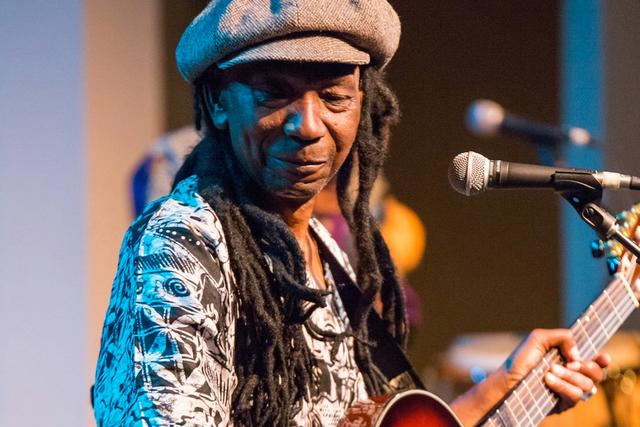
Thomas Mapfumo
Thomas Tafirenyika Mapfumo (born July 3, 1945) is a musician nicknamed "The Lion of Zimbabwe" and "Mukanya" (the praise name of his clan in the Shona language) for his immense popularity and for the political influence he wields through his music, including his sharp criticism of the government of President Robert Mugabe. He both created and made popular Chimurenga music, and his slow-moving style and distinctive voice is instantly recognisable to Zimbabweans. Mapfumo was imprisoned without charges under the white-dominated regime of Rhodesia, and he was hounded by the Mugabe government of Zimbabwe that succeeded it. He lived in exile in the United States for two decades, and in April 2018, returned to Zimbabwe for the first time since 2005 to perform a concert. Mapfumo was born in 1945 in Marondera, Mashonaland East, a town southeast of Harare, the capital of Zimbabwe, though at the time the capital was called Salisbury and the country was a colony of Great Britain called Southern Rhodesia (becoming Rhodesia in ordinary usage after Northern Rhodesia gained independence as Zambia). He lived a traditional, rural Shona lifestyle until the age of ten, when his family moved to the Harare township of Mbare. It was during these early years that he was exposed to the traditional music of the Shona, the influence of which would drive his later music to incorporate and/or reflect the sounds of the ngoma drum and the mbira, a metal-pronged instrument with spiritual importance.
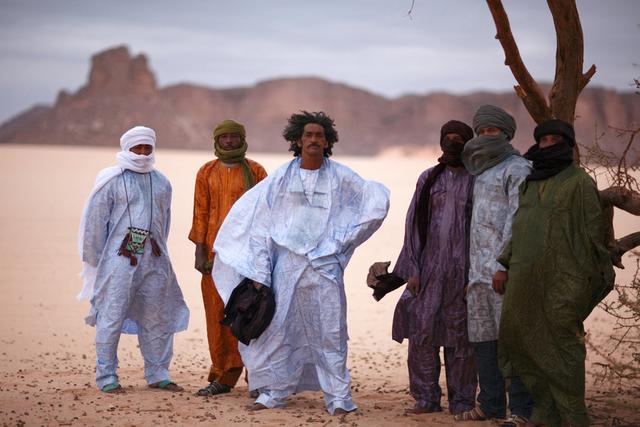
Tinariwen
Tinariwen, pronounced tinariwen "deserts", plural of ténéré "desert" is a group of Tuareg musicians from the Sahara Desert region of northern Mali. The band was formed in 1979 in Tamanrasset, Algeria, but returned to Mali after a cease-fire in the 1990s. The group first started to gain a following outside the Sahara region in 2001 with the release of The Radio Tisdas Sessions, and with performances at Festival au Désert in Mali and the Roskilde Festival in Denmark. Their popularity rose internationally with the release of the critically acclaimed Aman Iman in 2007. NPR calls the group "music's true rebels", AllMusic deems the group's music "a grassroots voice of rebellion", and Slate calls the group "rock 'n' roll rebels whose rebellion, for once, wasn't just metaphorical"

Vieux Diop
Vieux Diop (pronounced "Via Jo") is a master of the kora, a 21-stringed instrument indigenous to West Africa. A former member of Youssou N'Dour's band, Diop has toured with African percussionist Babatunde Olatunji and jazz musicians Jean Paul Borelli and Roy Brooks. Since emigrating to the U.S. in 1984, Diop has lectured and performed at colleges and universities including the Julliard School of Music in New York, which was the site of a weekly series, West African Journey, that he hosted in 1996. Diop serves as host of a biweekly radio show on world music, Musical Conversations, broadcast by New York radio station, WBAI-FM. While his music remains rooted in the traditions of West Africa, Diop has increasingly incorporated contemporary roots music influences. Cash Box observed that Diop "...serves up bobbing, weaving, grooves that are undeniable to the human pulse." In addition to creating heartfelt melodies on the kora, Diop plays the dissunguni (bass kora) and djembe, and sings in a mixture of traditional African languages (Wolof, Mandigo and Bambara), French and English. He has released albums to the US, starting with his self-titled 1995 debut and continuing into the next decade.

Vieux Farka Touré
Often referred to as “The Hendrix of the Sahara”, Vieux Farka Touré was born in Niafunké, Mali in 1981. He is the son of legendary Malian guitar player Ali Farka Touré, who died in 2006. Ali Farka Touré came from a historical tribe of soldiers, and defied his parents in becoming a musician. When Vieux was in his teens, he declared that he also wanted to be a musician. His father disapproved due to the pressures he had experienced being a musician. Rather, he wanted Vieux to become a soldier. But with help from family friend the kora maestro Toumani Diabaté, Vieux eventually convinced his father to give him his blessing to become a musician shortly before Ali passed. Vieux was initially a drummer / calabash player at Mali’s Institut National des Arts, but secretly began playing guitar in 2001. Ali Farka Touré was weakened with cancer when Vieux announced that he was going to record an album. Ali recorded a couple of tracks with him, and these recordings, which can be heard on Vieux’s debut CD, were amongst his final ones. It has been said that the senior Touré played rough mixes of these songs when people visited him in his final days, at peace with, and proud of, his son’s talent as a musician. In 2005, Eric Herman (still Vieux’s manager today) of Modiba Productions expressed an interest in producing an album for Vieux; this led to Vieux’s self-titled debut album, released by World Village in 2007. Ali Farka Touré’s work to tackle the problem of malaria is continued as 10% of proceeds are donated to Modiba’s “Fight Malaria” campaign in Niafunké through which over 3000 mosquito nets have been delivered to children and pregnant women in the Timbuktu region of Mali. On this first album, Vieux pays homage to his father and follows Ali’s musical tradition, giving new versions of the West African music that is echoed in the American blues. The album features Toumani Diabaté, as well as his late father. One of the tracks, ‘Courage’, is on the soundtrack of the film The First Grader (2010). On his second record, Fondo on Six Degrees (2009), Vieux branched out and presented his own sound: while remaining true to the roots of his father’s music he uses elements of rock, Latin music, and other African influences. The album received a great deal of critical acclaim from across the globe, and Vieux was clearly moving out of his father’s shadow. By June 2010, Vieux was performing at the opening concert for the FIFA World Cup in South Africa. That month Vieux also released his first live album, LIVE. His live performances are highly energized and Vieux is known for dazzling crowds with his speed and dexterity on the guitar, as well as his palpable charisma and luminous smile, both of which captivate audiences from all audiences in spite of any language barriers (though Vieux does speak 8 languages). In 2011 Vieux released his 3rd studio album, The Secret, so named because the listener will hear the secret of the blues with a blend of generations from father to son. It was produced by guitarist Eric Krasno (of the Soulive trio) and features South African-born vocalist Dave Matthews, Derek Trucks on electric slide guitar and jazz guitarist John Scofield. The title track is the last collaboration between Vieux and his late father. With the heralded release of The Secret, Vieux Farka Touré has clearly established himself as one of the world’s rare musical talents and guitar virtuosos with a distinct style that always pays homage to the past while looking towards the future. Vieux released The Tel Aviv Session (Cumbancha) in April 2012, a collaborative project with Israeli superstar Idan Raichel dubbed ‘The Touré-Raichel Collective’ that has been hailed by fans and critics alike as a masterpiece and one of the best collaborative albums in the history of international music, drawing comparisons to Ali Farka Touré and Ry Cooder’s legendary Talking Timbuktu album. In 2013, Vieux Farka Touré’s beautiful and critically acclaimed latest album Mon Pays was released as an homage to his homeland. Being that his native Mali had recently been splintered by territorial fighting between Tuareg and Islamic rebels since January 2012, Mon Pays was devoted to reminding the world about the beauty and culture of his native Mali. Translated as ‘My Country,’ this predominantly acoustic undertaking transformed into an artifact of cultural preservation. Two songs on the project -Future’ and ‘Peace’ feature Sidiki Diabate’s kora leading an emotional charge complemented by Touré’s spectacular guitar work. Both tracks represent an important generational “passing of the torch” as Sidiki’s father, Toumani is considered one of the greatest living kora masters and was a close friend of Vieux’s father Ali. Mon Pays has been widely hailed as the most mature and lovely record yet from one of this generation’s most exciting artists to come out of Mali and one of world music’s true rising stars. Vieux reunited with Idan Raichel in Paris to record, release and subsequently tour their 2nd collaborative album as The Touré-Raichel Collective in 2014. The result was yet another musical and critical triumph, titled 'The Paris Session' (Cumbancha) revered by many as not just a musical gem for the ages but a powerful testimonial to the power of art and fraternity to transcend vast cultural and political divides. In 2015, Vieux released another unexpected, genre-bending collaborative album, this time with New York-based singer Julia Easterlin, aptly titled 'Touristes'. The album shot to the top of the iTunes World chart and earned critical acclaim, including that of John Schaefer (NPR) who called it "brilliant." On April 7, 2017, Vieux released his latest album 'Samba', recorded live in front of a small audience at Applehead Studio in Woodstock, NY. The album was being hailed by critics as Vieux's finest, most well-rounded and mature album to date. With each new project, Vieux expands his horizons, embraces new challenges and further entrenches his reputation as one of the world’s most talented and innovative musicians.